
Understanding the P0308 Cylinder 8 Misfire Code
P0308 Code: What Causes a Cylinder 8 Misfire. See symptoms, common causes, driving risk and checks that help confirm the fault before parts are replaced.
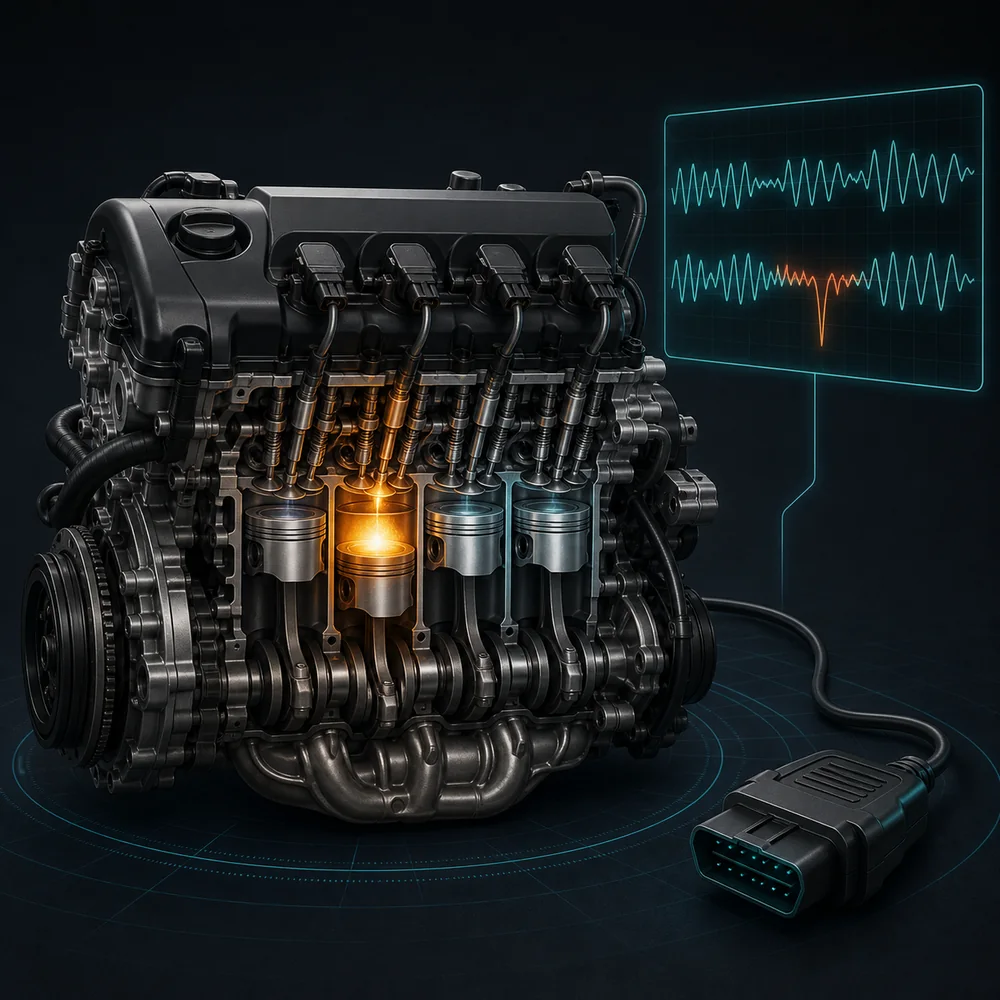
Save all codes and freeze-frame data. The code tells you what the control module detected, not which component must be replaced.
Quick answer
Code P0308 is a diagnostic trouble code indicating a misfire detected specifically in cylinder 8 of your engine. The engine control module (ECM) triggers this code when it senses that cylinder 8 is not contributing properly to the combustion process, often due to a lack of spark, fuel, or compression in that cylinder.
What a Cylinder 8 Misfire Actually Means
When the ECM detects a P0308 code, it means the crankshaft position sensor (CKP) and camshaft position sensor (CMP) have reported irregularities in the rotation speed of the crankshaft that align with cylinder 8's firing cycle. In most engines, cylinder 8 is located on the passenger-side bank (for V8 engines), and the ECM compares the expected rotational speed against the actual speed during that cylinder's power stroke. A misfire occurs when the combustion in cylinder 8 fails to produce the expected power output, causing a slight but detectable drop in crankshaft RPM.
The ECM uses input from the CKP sensor to monitor the crankshaft's rotational speed in real time. During normal operation, each cylinder's combustion event contributes a small, consistent boost to the crankshaft's momentum. If cylinder 8 misfires, the crankshaft's speed momentarily dips; this dip is what the ECM flags as a misfire. The code P0308 is cylinder-specific, meaning the ECM has isolated the issue to cylinder 8 rather than reporting a random or multiple-cylinder misfire (like P0300).
Several subsystems can trigger this code. The most direct is the ignition system: a faulty spark plug, a failing ignition coil, or a damaged spark plug wire (in older systems) can prevent cylinder 8 from firing. Fuel delivery issues are another common culprit; clogged or failing fuel injectors, or low fuel pressure from a weak fuel pump, can starve cylinder 8 of the fuel it needs for proper combustion. Less commonly, mechanical problems like low compression (due to a worn piston ring, bent valve, or blown head gasket) or a vacuum leak near cylinder 8's intake runner can also cause a misfire.
The ECM will typically log a P0308 code if it detects a misfire severe enough to affect emissions or drivability. In many cases, the misfire must occur multiple times within a set number of driving cycles before the code is stored and the check engine light is illuminated. Some vehicles may also exhibit a flashing check engine light if the misfire is severe enough to risk catalytic converter damage.
Diagnosing a P0308 code often starts with a visual inspection of cylinder 8's components, followed by a process of elimination. Technicians commonly swap the ignition coil or spark plug from cylinder 8 with another cylinder to see if the misfire moves, which helps isolate the fault. A scan tool can also provide freeze frame data, showing the engine conditions (RPM, load, temperature) when the misfire occurred, which can point toward likely causes.
Common Symptoms of a P0308 Misfire
A P0308 misfire often causes a noticeable rough idle, especially in V8 engines where the imbalance of one cylinder not firing is more pronounced. During acceleration, you may feel a hesitation or jerking as the engine struggles to maintain smooth power delivery. At steady highway speeds, a slight vibration or loss of power may be felt, particularly under load. In severe cases, the engine may run so roughly that it shakes the entire vehicle.
Typical Fixes for P0308
Repairs for a P0308 code vary widely depending on the root cause. Common fixes include replacing the spark plug or ignition coil for cylinder 8, cleaning or replacing a clogged fuel injector, or addressing a vacuum leak. In more serious cases, mechanical repairs like a valve job or head gasket replacement may be necessary. Repairs typically range from $150 to $1,000+ depending on the cause; see the full P0308 repair cost guide for a detailed breakdown.
Can You Still Drive With Code P0308?
Driving with a P0308 code is generally possible for short distances, but it's not advisable for long-term use. A persistent misfire can lead to catalytic converter damage due to unburned fuel entering the exhaust system, which can result in costly repairs. If the misfire is severe or accompanied by a flashing check engine light, pull over immediately to avoid further damage.
Details that improve the diagnosis
Watch the misfire counters at idle, during a gentle increase in engine speed and under load if a safe road test is possible. Compare fuel trims and note whether the fault follows temperature, moisture or a recent service. A cylinder pattern is often more useful than the code description alone.
Before clearing anything, record whether the code is current, pending, history or permanent. Save companion codes and freeze-frame conditions, then note recent repairs, a weak battery, weather changes and the exact moment the symptom appears. After a confirmed repair, clear only the erasable codes and complete the appropriate drive cycle. A permanent code normally clears only after the onboard monitor verifies that the fault is gone.