
P0300 Code: Random Misfire Meaning and Solutions
P0300 Code: Causes and Fixes for Random Misfires. See symptoms, common causes, driving risk and checks that help confirm the fault before parts are replaced.
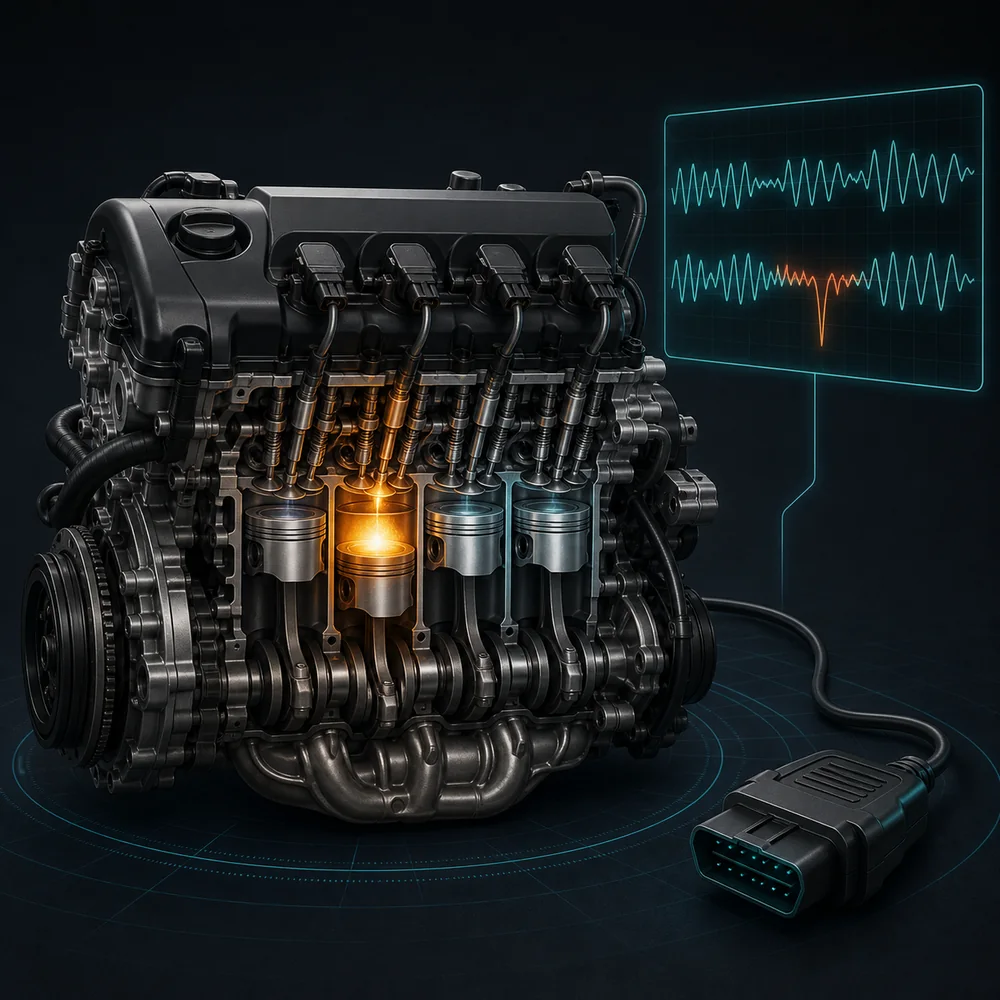
Save all codes and freeze-frame data. The code tells you what the control module detected, not which component must be replaced.
Quick answer
OBD2 code P0300 indicates a random engine misfire detected by the ECM, meaning multiple cylinders are misfiring without a consistent pattern. It triggers when the engine control module senses uneven combustion across cylinders, often due to fuel, spark, or air intake issues. Addressing it promptly prevents catalytic converter damage and poor engine performance.
How to Diagnose and Fix a Random Misfire (P0300)
Fixing a P0300 code requires a systematic approach to isolate the root cause. Start with a visual inspection for obvious issues, then use diagnostic tools to narrow down the problem. Below is a step-by-step guide for a DIYer with basic mechanical skills; the difficulty is moderate, and most steps can be completed with common tools.
Tools Needed
OBD2 scanner (with live data capability), spark plug socket, ratchet set, multimeter, fuel pressure gauge, compression tester, and basic hand tools (wrenches, screwdrivers). A scan tool that reads misfire counters (like Mode $06 data) is especially helpful.
Step-by-Step Fix Guide
1. Confirm the Code and Freeze Frame Data
Use an OBD2 scanner to verify P0300 is the only code or if other misfire codes (e.g., P0301-P0308) are present. Check freeze frame data to note engine conditions (RPM, load, temperature) when the misfire occurred. This helps determine if the issue is heat-related, load-related, or consistent.
2. Inspect for Basic Issues
Check for damaged or disconnected spark plug wires, cracked distributor caps (if applicable), or loose coil packs. Look for vacuum leaks at intake manifolds, hoses, or gaskets; common culprits for lean misfires. A hissing sound at idle often signals a vacuum leak. Also, inspect the air filter and MAF sensor for contamination.
3. Test Spark Plugs and Ignition Components
Remove and inspect spark plugs for wear, oil fouling, or improper gap. Replace them if they're worn (typically every 30,000-100,000 miles, depending on type). Test ignition coils with a multimeter for proper resistance (refer to service manual specs) or swap coils between cylinders to see if the misfire follows the coil. Faulty coils are a top cause of P0300 in modern engines.
4. Check Fuel System Health
Use a fuel pressure gauge to verify fuel pressure meets manufacturer specifications (usually 35-65 psi for port-injected engines). Low pressure can indicate a failing fuel pump, clogged fuel filter, or leaking injectors. Listen for the fuel pump hum at key-on (no start) to confirm it's running. Clogged fuel injectors can be tested with a noid light or by swapping injectors between cylinders.
5. Evaluate Air Intake and Sensors
A dirty MAF sensor can skew air-fuel ratios, causing misfires. Clean it with MAF-specific cleaner or replace if damaged. Check for intake leaks between the MAF and throttle body, as unmetered air throws off the ECM's calculations. A faulty O2 sensor or ECT sensor can also contribute to misfires by providing incorrect data to the ECM.
6. Perform a Compression Test
If the above steps don't reveal the issue, a compression test can identify mechanical problems like worn piston rings, bent valves, or a blown head gasket. Low compression in one or more cylinders points to internal engine wear. This step is more advanced and may require professional help if you're unfamiliar with the process.
7. Clear Codes and Test Drive
After addressing the suspected cause, clear the P0300 code with your scanner and take the vehicle for a test drive. Use the scanner's live data to monitor misfire counters in real-time. If the code returns, revisit the most likely causes or consider professional diagnostics.
Safety Notes
Never work on a hot engine; allow it to cool to avoid burns. Disconnect the battery before servicing electrical components to prevent shorts. If you're uncomfortable with electrical or fuel system diagnostics, consult a professional.
Common Causes of P0300
P0300 is most often caused by ignition system failures (faulty spark plugs, coils, or wires), fuel system issues (clogged injectors, low fuel pressure), or air intake problems (vacuum leaks, dirty MAF sensor). Less commonly, it can stem from mechanical issues like low compression or a failing catalytic converter. In most cases, the root cause is electrical or fuel-related rather than internal engine damage.
Symptoms of a Random Misfire
Drivers typically notice a rough idle, hesitation during acceleration, or a lack of power; especially under load. The check engine light may flash if the misfire is severe enough to damage the catalytic converter. Fuel economy often drops, and the exhaust may emit a sulfur-like smell if unburnt fuel is passing through the catalytic converter.
Can You Still Drive With Code P0300?
You can usually drive short distances with a P0300 code, but it's not recommended for long trips. Prolonged driving with a misfire can overheat the catalytic converter, leading to expensive damage. If the check engine light is flashing, pull over immediately to avoid further harm.
Details that improve the diagnosis
Watch the misfire counters at idle, during a gentle increase in engine speed and under load if a safe road test is possible. Compare fuel trims and note whether the fault follows temperature, moisture or a recent service. A cylinder pattern is often more useful than the code description alone.
Before clearing anything, record whether the code is current, pending, history or permanent. Save companion codes and freeze-frame conditions, then note recent repairs, a weak battery, weather changes and the exact moment the symptom appears. After a confirmed repair, clear only the erasable codes and complete the appropriate drive cycle. A permanent code normally clears only after the onboard monitor verifies that the fault is gone.