
Spark Plugs or Ignition Coils: Which Causes Misfire Codes?
Spark Plugs vs Ignition Coils: What Triggers Misfires. See symptoms, common causes, urgency and practical checks before parts are replaced.
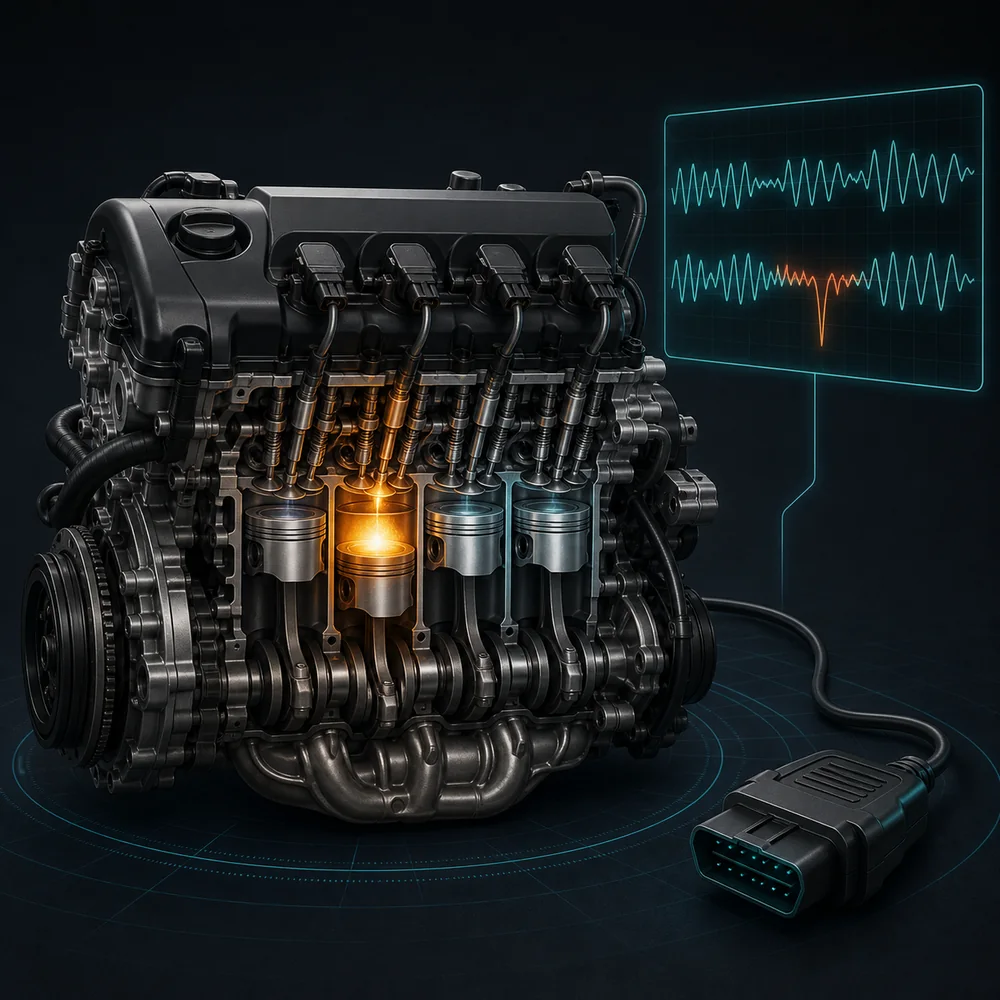
Save all codes and freeze-frame data. The code tells you what the control module detected, not which component must be replaced.
Quick answer
Spark plugs cause P0300 misfire codes more often than ignition coils in most cases, especially on higher-mileage vehicles. Worn or fouled plugs are the leading culprit due to their shorter lifespan, while coil failures tend to be less frequent but often more severe when they occur.
Spark Plugs vs Ignition Coils: Which Causes Misfire Codes More Often?
Why Spark Plugs Are the More Common Offender
Spark plugs degrade over time due to electrode wear, carbon buildup, or oil fouling, leading to weak or inconsistent sparks. In most engines, plugs are recommended for replacement every 30,000-100,000 miles, depending on the material (copper, platinum, or iridium). As they wear, the spark gap widens, requiring higher voltage to jump the gap; something aging coils may struggle to provide. This creates a snowball effect: weak plugs stress the coils, but the plugs themselves fail first in the majority of cases. Drivers often notice rough idle, hesitation under load, or a slight drop in fuel economy before the check engine light appears.
When Ignition Coils Are the Likely Cause
Ignition coils fail less frequently but are more likely to cause sudden, cylinder-specific misfires (e.g., P0301, P0302). A failing coil may produce no spark at all or an intermittent spark, often due to internal shorts, cracked insulation, or overheating. Unlike plugs, coil failures don't follow a predictable mileage timeline; they can last 100,000+ miles or fail prematurely due to poor heat dissipation (common in engines with coils mounted directly on the spark plugs, like coil-on-plug systems). A dead coil typically triggers a misfire code for a single cylinder, while a weak coil might cause random or multiple-cylinder misfires. Coil failures also tend to be more noticeable at higher RPMs, where the demand for consistent, high-energy sparks is greatest.
How to Tell Them Apart Without a Scan Tool
Spark plug issues often cause misfires that worsen gradually, with symptoms like rough idle or stumbling during acceleration. In contrast, a bad ignition coil may cause a sudden loss of power, a persistent misfire in one cylinder, or a check engine light that flashes during hard acceleration. Swapping a suspected coil or plug with a known-good one from another cylinder can quickly confirm the culprit; if the misfire follows the part, you've found the issue. However, a scan tool with live data (to monitor misfire counters per cylinder) is the most reliable method for diagnosis.
Prevention and Longevity Tips
Sticking to the manufacturer's recommended spark plug replacement interval is the best way to avoid plug-related misfires. Using the correct plug type (e.g., iridium for high-performance engines) and gap specification also prevents premature wear. For coils, ensuring proper heat shielding and avoiding aftermarket parts of questionable quality can extend their lifespan. In engines with coil-on-plug designs, replacing all coils at once when one fails is often recommended, as the remaining coils are likely to fail soon due to similar age and stress.
Diagnosing the Underlying Cause
A professional diagnostic approach starts with reading the freeze frame data to see when the misfire occurred (e.g., cold start, highway speed). From there, a mechanic will typically check for spark at the affected cylinder, test coil resistance, and inspect the plugs for wear or damage. Compression and fuel system tests may also be performed to rule out other causes. See the full P0300 repair cost guide for a detailed breakdown of potential expenses by cause.
Symptoms You Might Notice
Misfires from spark plugs or coils commonly cause a rough or unstable idle, hesitation during acceleration, or a noticeable loss of power. The check engine light may flash if the misfire is severe enough to damage the catalytic converter. In most cases, the severity of symptoms correlates with the extent of the issue; minor plug wear may only cause occasional stumbling, while a dead coil can make the car nearly undriveable.
Can You Still Drive With Code P0300?
Driving with a P0300 code is not recommended, as prolonged misfires can damage the catalytic converter, which is a far more expensive repair. If the misfire is severe (e.g., the car is shaking violently or the check engine light is flashing), pull over and have the vehicle towed. For minor misfires, limit driving to essential trips until the issue is resolved.
Details that improve the diagnosis
Watch the misfire counters at idle, during a gentle increase in engine speed and under load if a safe road test is possible. Compare fuel trims and note whether the fault follows temperature, moisture or a recent service. A cylinder pattern is often more useful than the code description alone.
Before clearing anything, record whether the code is current, pending, history or permanent. Save companion codes and freeze-frame conditions, then note recent repairs, a weak battery, weather changes and the exact moment the symptom appears. After a confirmed repair, clear only the erasable codes and complete the appropriate drive cycle. A permanent code normally clears only after the onboard monitor verifies that the fault is gone.