
P0315 - Crankshaft Position System Variation Not Learned
P0315: Crankshaft Position System Variation Not Learned Fix. See symptoms, common causes, urgency and practical checks before parts are replaced.
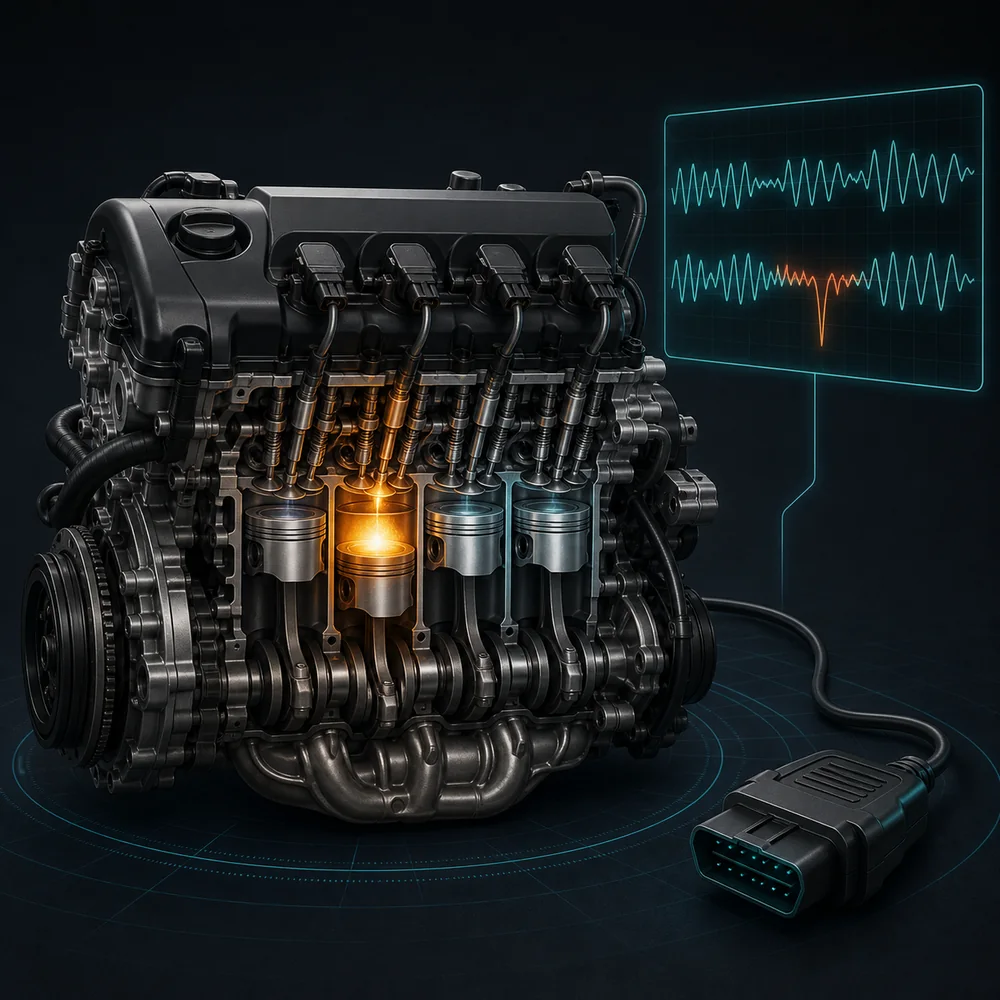
Save all codes and freeze-frame data. The code tells you what the control module detected, not which component must be replaced.
Quick answer
Code P0315 means the engine control module (ECM) hasn't successfully learned the crankshaft position system variation, which is a self-calibration process it performs to account for minor mechanical differences between engines. This learning typically occurs during a specific drive cycle after the battery is disconnected, the ECM is reset, or a related repair is made.
What "Crankshaft Position System Variation Not Learned" Means
The crankshaft position (CKP) sensor monitors the exact rotational speed and position of the crankshaft, which the ECM uses to control ignition timing, fuel injection, and other critical engine functions. However, no two engines are mechanically identical; manufacturing tolerances, wear, and component fitment create slight variations in crankshaft rotation behavior. To compensate, the ECM runs a learning routine to map these unique characteristics, storing the data in its adaptive memory.
P0315 sets when the ECM expects this variation data to be present but finds it either missing or incomplete. This commonly happens after:
Battery disconnection or ECM reset: The adaptive memory is volatile and clears when power is cut. The ECM then expects to relearn the variation during a predefined drive cycle (usually involving steady highway speeds and specific RPM ranges). If the conditions for learning aren't met; such as interrupted driving, low battery voltage, or a faulty sensor; the code will remain.
Replacement of engine components: Swapping the crankshaft, CKP sensor, flywheel, or timing components can alter the rotational signature enough to invalidate the stored variation data. The ECM must relearn the new pattern, and if it can't, P0315 will trigger.
CKP sensor or wiring issues: If the CKP sensor is weak, contaminated, or its wiring is damaged, the signal may be erratic or intermittent. The ECM may attempt the learning process but fail to capture consistent data, leading to the code. This is less common than a simple memory reset but should be checked if the code persists after multiple drive cycles.
Software or ECM limitations: In rare cases, older or corrupted ECM software may struggle to complete the learning process, especially if updates were interrupted. A reflash or update from the manufacturer may be required.
The ECM doesn't set P0315 immediately; it typically waits for a full drive cycle where the learning conditions are met. If the variation still isn't learned, the code becomes permanent, and in most cases, a Check Engine Light will illuminate. Importantly, P0315 itself does not indicate a mechanical failure; it's a diagnostic flag that the ECM's adaptive strategy is incomplete.
Symptoms of P0315
P0315 usually doesn't cause noticeable driving issues, as the engine can still run using default values. However, you may experience slightly rough idle, minor hesitation during acceleration, or reduced fuel efficiency. These symptoms occur because the ECM is operating without optimized timing and fuel maps. In some vehicles, a persistent P0315 can prevent other adaptive strategies from engaging, leading to a cascade of minor drivability complaints.
Common Fixes for P0315
In most cases, the fix is simply completing the ECM's learning procedure. This involves a drive cycle at steady speeds (often 45-65 mph for 10-15 minutes) with minimal accessory load. If the code returns, inspect the CKP sensor and wiring for damage or corrosion. Replacing the sensor or repairing the wiring commonly resolves persistent cases. For a full cost breakdown, see the full P0315 repair cost guide.
Can You Still Drive With Code P0315?
Yes, you can usually drive with P0315, as it doesn't pose an immediate safety risk or cause severe drivability issues. However, prolonged driving with an unlearned variation may lead to reduced performance and fuel economy. If the code persists after attempting the learning procedure, have the vehicle inspected to rule out sensor or wiring faults.
Details that improve the diagnosis
Watch the misfire counters at idle, during a gentle increase in engine speed and under load if a safe road test is possible. Compare fuel trims and note whether the fault follows temperature, moisture or a recent service. A cylinder pattern is often more useful than the code description alone.
Before clearing anything, record whether the code is current, pending, history or permanent. Save companion codes and freeze-frame conditions, then note recent repairs, a weak battery, weather changes and the exact moment the symptom appears. After a confirmed repair, clear only the erasable codes and complete the appropriate drive cycle. A permanent code normally clears only after the onboard monitor verifies that the fault is gone.
Related trouble codes
Information to record before any repair
Write down the exact code, its status and every companion code reported by a complete vehicle scan. Save the freeze-frame values, including engine speed, load, coolant temperature, vehicle speed, battery voltage and fuel trims when available. Note whether the warning appeared during a cold start, at idle, under acceleration, after refueling, in wet weather or immediately after other work. These details help separate an intermittent electrical problem from a repeatable mechanical or operating-condition fault.
Identify the exact year, make, model, engine, transmission and market version before using a wiring diagram or specification. Connector pinouts, monitor thresholds, component locations and test procedures can change within the same model line. Check current manufacturer service information and relevant technical service bulletins. A bulletin can improve the test sequence, but it should not be treated as proof that the same fault exists on every vehicle.
How to verify the repair
A warning light that stays off immediately after codes are cleared does not by itself confirm a repair. Recheck live data, repeat the operating condition that originally set the code when it is safe to do so, and confirm that no pending code returns. Some monitors need a specific drive cycle before they run. Permanent codes are normally removed by the control module only after it sees enough successful monitor results. If symptoms remain or the code returns, continue testing instead of replacing another part by guesswork.