
P0700: Transmission Control System Malfunction Explained
P0700 Code: Causes of Transmission Control System Malfunction. See symptoms, common causes, urgency and practical checks before parts are replaced.
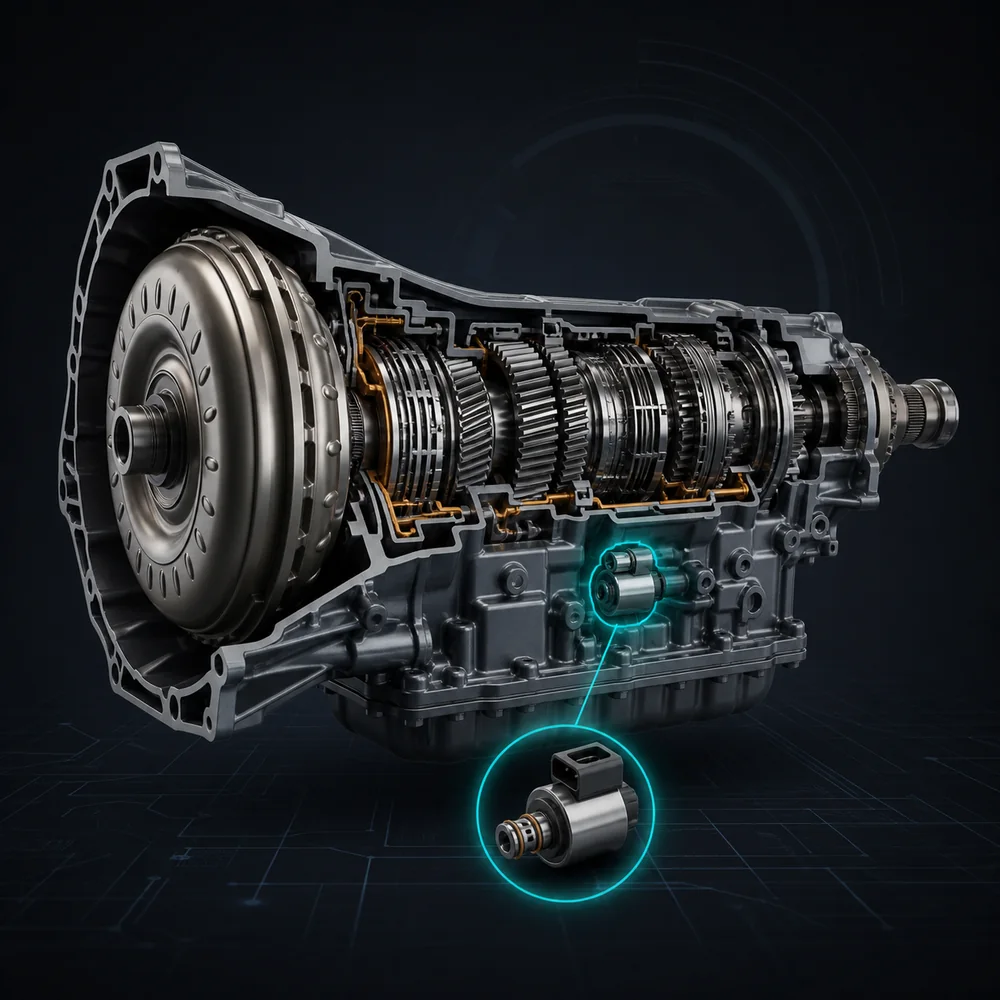
Save all codes and freeze-frame data. The code tells you what the control module detected, not which component must be replaced.
Quick answer
Code P0700 indicates a detected fault within the transmission control system, as reported by the Transmission Control Module (TCM) to the Engine Control Module (ECM). It's a generic trouble code that signals a malfunction in the system managing gear shifts, clutch engagement, or torque converter operation, but it doesn't specify the exact issue on its own.
What the P0700 Code Means: Transmission Control System Malfunction
The P0700 code is triggered when the TCM detects an internal error in its ability to control or monitor the automatic transmission's operation. Unlike many OBD2 codes that point to a specific sensor or circuit, P0700 is a "communication" code, meaning the TCM has recognized a problem in one of its sub-systems or circuits and is alerting the ECM to illuminate the check engine light. This code is often accompanied by additional transmission-specific codes (e.g., P0730, P0740) that provide more detail, but P0700 itself can appear alone if the TCM cannot isolate the fault further.
The TCM relies on inputs from sensors such as the transmission fluid temperature sensor, vehicle speed sensor (VSS), turbine shaft speed sensor, and throttle position sensor (TPS) to determine the optimal shift points, line pressure, and torque converter clutch engagement. When one or more of these inputs are out of expected ranges, or when the TCM detects an internal failure (such as a faulty solenoid, wiring issue, or software glitch), it logs P0700. For example, if the TCM commands a shift solenoid to engage but receives no feedback or an incorrect voltage, it may assume a control system malfunction and set the code.
In most modern vehicles, the TCM and ECM communicate over a Controller Area Network (CAN) bus. If this communication is interrupted or corrupted, P0700 may also be set. However, this is less common than sensor or solenoid-related issues. The code can also appear if the transmission is slipping, overheating, or failing to shift gears properly, as these conditions often stem from control system failures.
It's important to note that P0700 is not a code for low transmission fluid or a mechanical failure like a broken gear; those would typically trigger different codes or symptoms. Instead, P0700 is strictly about the electronic or hydraulic control side of the transmission. That said, low fluid or mechanical damage can sometimes cause secondary control issues that lead to P0700, so a full diagnosis is necessary to rule out underlying causes.
Because the code is generic, the first step in diagnosis is to check for additional transmission-related codes stored in the TCM. These codes often pinpoint the specific circuit or component at fault, such as a faulty shift solenoid (P0750-P0755), a pressure control solenoid (P0760-P0765), or a speed sensor issue (P0500-P0503). Without these supporting codes, the diagnosis becomes more involved, often requiring a scan tool capable of accessing TCM data to monitor sensor readings, solenoid operation, and transmission fluid pressure in real time.
Common Symptoms of P0700
Drivers often notice harsh or delayed shifting, the transmission getting stuck in a single gear (commonly "limp mode"), or the check engine light illuminating with no immediate drivability issues. In some cases, the vehicle may exhibit poor acceleration or a sudden drop in fuel efficiency due to the transmission's inability to shift optimally. See the full P0700 repair cost guide for a detailed breakdown.
Typical Causes of P0700
Common causes include faulty shift solenoids, damaged wiring or connectors in the transmission control circuit, a failing transmission control module, or low/poor-quality transmission fluid affecting sensor readings. In rare cases, a software update for the TCM may resolve the issue if the malfunction is due to a programming glitch. Repairs typically range from $150 to $1,000+ depending on the cause.
Can You Still Drive With Code P0700?
Driving with P0700 is generally not recommended, especially if the vehicle exhibits shifting issues or enters limp mode. While it may be safe to drive short distances at low speeds to a repair shop, continued driving can risk further transmission damage or leave you stranded if the vehicle loses the ability to shift gears. Always prioritize diagnosis and repair.
Details that improve the diagnosis
Use a scanner that can enter the transmission controller, not only generic engine OBD mode. Record fluid temperature, input and output speeds, commanded gear and slip data. Low voltage, incorrect fluid level and connector faults should be excluded before internal transmission work is considered.
Before clearing anything, record whether the code is current, pending, history or permanent. Save companion codes and freeze-frame conditions, then note recent repairs, a weak battery, weather changes and the exact moment the symptom appears. After a confirmed repair, clear only the erasable codes and complete the appropriate drive cycle. A permanent code normally clears only after the onboard monitor verifies that the fault is gone.
Information to record before any repair
Write down the exact code, its status and every companion code reported by a complete vehicle scan. Save the freeze-frame values, including engine speed, load, coolant temperature, vehicle speed, battery voltage and fuel trims when available. Note whether the warning appeared during a cold start, at idle, under acceleration, after refueling, in wet weather or immediately after other work. These details help separate an intermittent electrical problem from a repeatable mechanical or operating-condition fault.
Identify the exact year, make, model, engine, transmission and market version before using a wiring diagram or specification. Connector pinouts, monitor thresholds, component locations and test procedures can change within the same model line. Check current manufacturer service information and relevant technical service bulletins. A bulletin can improve the test sequence, but it should not be treated as proof that the same fault exists on every vehicle.
How to verify the repair
A warning light that stays off immediately after codes are cleared does not by itself confirm a repair. Recheck live data, repeat the operating condition that originally set the code when it is safe to do so, and confirm that no pending code returns. Some monitors need a specific drive cycle before they run. Permanent codes are normally removed by the control module only after it sees enough successful monitor results. If symptoms remain or the code returns, continue testing instead of replacing another part by guesswork.