
P0302 vs P0301: How Do They Differ?
P0302 vs P0301: Key Differences Explained. See symptoms, common causes, driving risk and checks that help confirm the fault before parts are replaced.
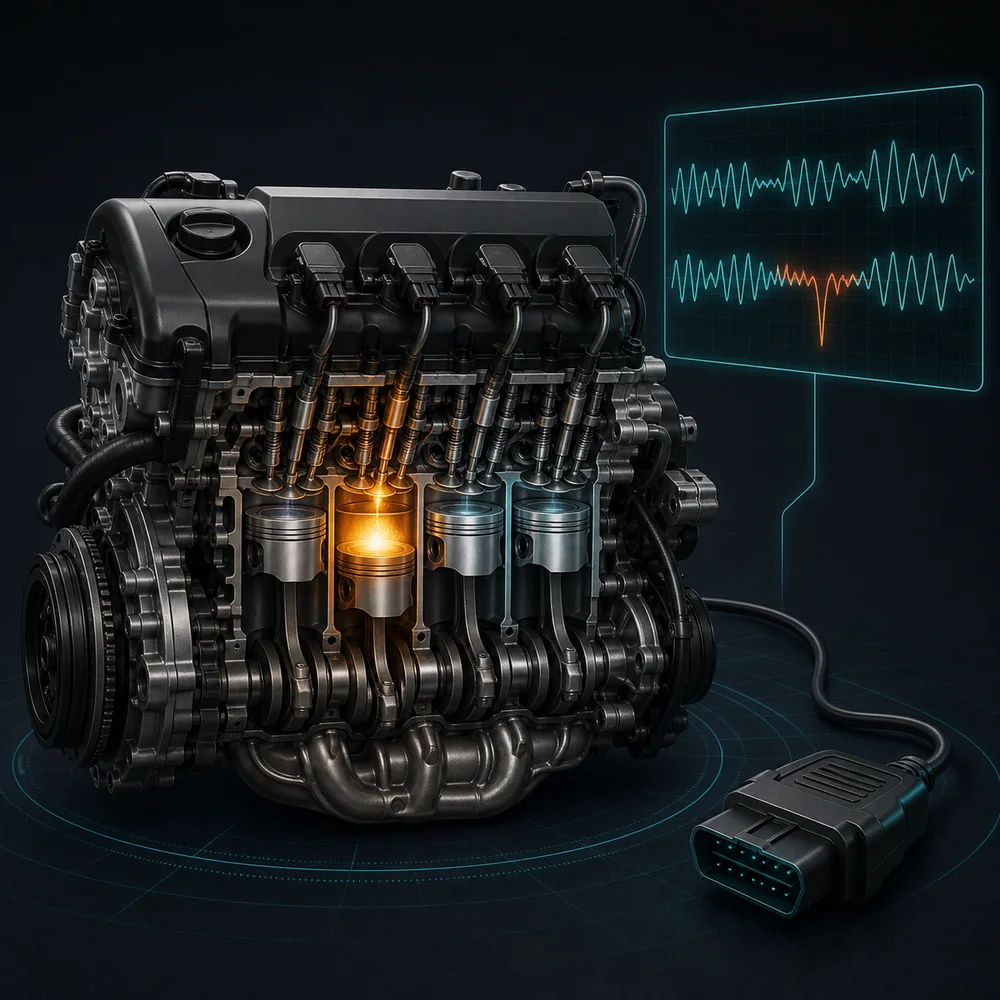
Save all codes and freeze-frame data. The code tells you what the control module detected, not which component must be replaced.
Quick answer
Both P0302 and P0301 are OBD2 codes indicating a cylinder misfire, but P0302 specifically identifies a misfire in cylinder 2, while P0301 points to cylinder 1. The numbering corresponds to the engine's cylinder numbering sequence, which varies by vehicle make and model.
P0302 vs P0301: How the Codes Differ in Diagnosis and Meaning
The core difference between P0302 and P0301 lies in which cylinder the engine control module (ECM) detects a misfire in. The ECM monitors crankshaft speed fluctuations through the crankshaft position sensor (CKP) and camshaft position sensor (CMP). When it detects an irregularity in the rotational speed of the crankshaft; such as a slowdown or inconsistency; it correlates that to a specific cylinder's power stroke. If the misfire is traced to cylinder 2 during its firing cycle, the ECM sets a P0302 code. If the issue is in cylinder 1, it sets P0301.
Cylinder numbering is standardized by engine design, not by position in the engine bay. In most inline engines (4-cylinder, 6-cylinder), cylinder 1 is at the timing belt or chain end, and the rest are numbered sequentially toward the transmission. In V-engine layouts (V6, V8), cylinder 1 is typically on the front bank (driver or passenger side, depending on the manufacturer), with odd-numbered cylinders on one bank and even on the other. This means a P0302 code on a V6 could refer to a cylinder on the opposite bank from P0301, affecting how a mechanic approaches diagnosis.
The ECM triggers these codes when it detects a misfire severe enough to impact emissions or drivability. A single misfire might not set a code immediately; most ECMs require the misfire to be consistent (e.g., 2-3 occurrences in a set number of engine cycles) or severe enough to exceed a threshold. This is why intermittent misfires may not trigger a P0301 or P0302 code until the issue worsens. The codes do not indicate why the misfire is happening; only where; so further diagnosis is required to isolate the root cause, whether it's a faulty spark plug, coil, fuel injector, or compression issue.
From a diagnostic standpoint, P0301 and P0302 are treated identically in terms of process, but the location of the misfire can hint at patterns. For example, if P0301 and P0302 appear together, it might suggest a shared issue like a faulty coil pack (if the engine uses a coil-on-plug system where adjacent cylinders share a coil) or a vacuum leak affecting that side of the engine. If only P0302 appears, the problem is isolated to cylinder 2's components or conditions.
It's also worth noting that some vehicles may log a P0300 (random/multiple cylinder misfire) alongside P0301 or P0302 if the ECM detects misfires in multiple cylinders but can't pinpoint them precisely. However, P0301 and P0302 are more specific, directly tying the misfire to a single cylinder, which narrows the diagnostic focus significantly.
Common Causes of P0301 and P0302
While P0301 and P0302 point to different cylinders, their root causes are nearly identical. The most common culprits include faulty spark plugs or wires, a failing ignition coil, a clogged or defective fuel injector, or low fuel pressure. Less commonly, causes can include a vacuum leak near the affected cylinder, low compression due to a worn piston ring or valve issue, or an EGR valve malfunction. Since the codes only identify the cylinder, the diagnosis must isolate which of these components is failing for that specific cylinder.
Symptoms of P0301 or P0302
Both codes typically present with similar symptoms: a rough idle, hesitation during acceleration, a noticeable lack of power, or an illuminated check engine light. In severe cases, the engine may shake or vibrate excessively, especially at idle or low speeds. The severity of symptoms often correlates with how frequently the misfire occurs; intermittent misfires may cause minor drivability issues, while consistent misfires can lead to significant performance loss. See the full P0302 repair cost guide for a detailed breakdown of potential fixes.
Can You Still Drive With Code P0302?
Driving with a P0302 code is generally possible for short distances, but it's not advisable for long-term use. A persistent misfire can damage the catalytic converter over time due to unburned fuel entering the exhaust system, leading to costly repairs. If the misfire is severe, you may also experience a loss of power or stalling, which can create unsafe driving conditions, especially in heavy traffic or at higher speeds.
Details that improve the diagnosis
Watch the misfire counters at idle, during a gentle increase in engine speed and under load if a safe road test is possible. Compare fuel trims and note whether the fault follows temperature, moisture or a recent service. A cylinder pattern is often more useful than the code description alone.
Before clearing anything, record whether the code is current, pending, history or permanent. Save companion codes and freeze-frame conditions, then note recent repairs, a weak battery, weather changes and the exact moment the symptom appears. After a confirmed repair, clear only the erasable codes and complete the appropriate drive cycle. A permanent code normally clears only after the onboard monitor verifies that the fault is gone.