
Diagnosing and Fixing a P0301 Misfire
P0301 Misfire: How to Diagnose and Fix It. See symptoms, common causes, driving risk and checks that help confirm the fault before parts are replaced.
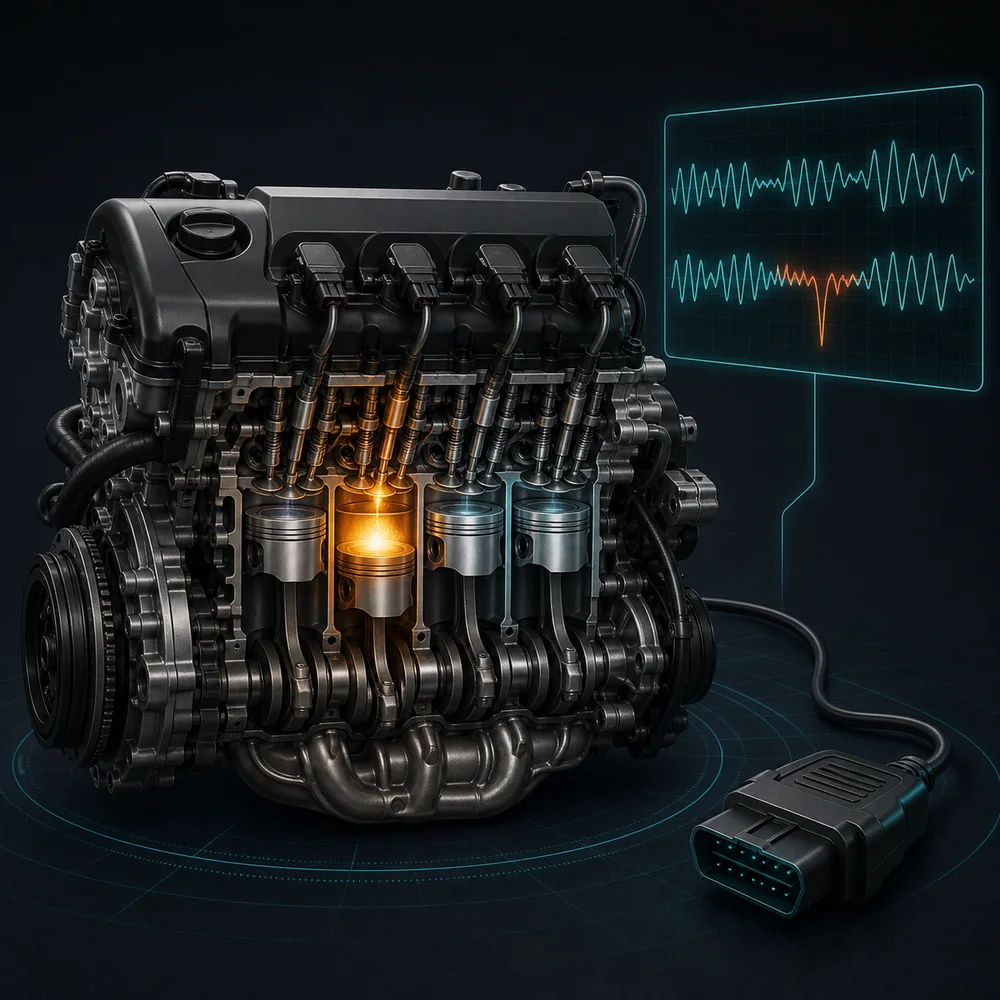
Save all codes and freeze-frame data. The code tells you what the control module detected, not which component must be replaced.
Quick answer
A P0301 code indicates a misfire detected on cylinder 1. To diagnose and fix it, start with a visual inspection of the spark plug, wire, and coil for that cylinder, then test for fuel delivery and compression issues. Most common fixes involve replacing a bad spark plug, ignition coil, or fuel injector.
How to Diagnose and Fix a P0301 Misfire
Tools You'll Need
Gather a scan tool (or OBD2 code reader), spark plug socket, spark plug tester (optional), compression tester, multimeter, and basic hand tools (ratchets, extensions, screwdrivers). A fuel pressure gauge is helpful but not always required. Safety first: work on a cool engine, disconnect the battery when servicing ignition components, and avoid fuel spills.
Step 1: Confirm the Code
Use your scan tool to verify P0301 is present and check for other codes. Clear the code and take a short test drive. If P0301 returns immediately, cylinder 1 is consistently misfiring. If the code takes longer to return or other misfire codes appear, the issue may be intermittent or affecting multiple cylinders.
Step 2: Inspect Spark Plug and Ignition Components
Locate cylinder 1 (refer to your vehicle's service manual; it's often the first cylinder on the driver's side in inline engines, but V6/V8 layouts vary). Remove the spark plug wire or coil-on-plug connector, then pull the spark plug. Check for damage: cracked porcelain, heavy carbon deposits, or oil fouling are red flags. If the plug looks worn or damaged, replace it. Next, inspect the spark plug wire (if equipped) for cracks or resistance. Use a multimeter to test the wire's resistance; compare it to spec (usually 5,000-25,000 ohms per foot). For coil-on-plug systems, swap the coil from cylinder 1 with another cylinder. If the misfire moves to the new cylinder, the coil is bad and needs replacement.
Step 3: Test for Spark
Reinstall the spark plug into the coil or wire, then ground the plug's metal body to the engine block with an insulated tool. Have an assistant crank the engine while you watch for a strong, blue spark. No spark? The issue is likely the coil, wire, or ECM. Weak or orange spark suggests low coil output or excessive resistance. If spark is strong, move to fuel system checks.
Step 4: Check Fuel Delivery
With the engine off, listen for the fuel pump hum when the key is turned to "ON" (no start). No hum often means a failed pump, but confirm with a fuel pressure test at the rail. Low pressure can starve cylinder 1. Next, swap the fuel injector from cylinder 1 with another cylinder. If the misfire follows the injector, it's faulty. A clogged injector can sometimes be cleaned with a fuel system additive, but replacement is more reliable.
Step 5: Test Compression and Mechanical Issues
Low compression in cylinder 1 can cause a misfire. Use a compression tester: screw it into the spark plug hole, disable fuel and ignition (unplug injectors or coils), then crank the engine. Compare the reading to spec (usually 125-200 psi, with no more than 10% variation between cylinders). Low compression may indicate a burnt valve, worn piston rings, or a blown head gasket. Leak-down and cylinder scope tests can pinpoint the exact issue, but these often require professional tools.
Step 6: Verify the Fix
After addressing the suspected cause, clear the code and test drive the vehicle. Monitor for a returning P0301 or new codes. If the misfire persists, revisit your diagnosis; intermittent issues like a failing coil or wiring problem may require deeper testing with an oscilloscope.
Difficulty Level
This is a moderate DIY job for those with basic mechanical skills. Spark plugs and coils are accessible in most vehicles, but fuel injectors and compression tests may require more effort. If you're unsure about fuel system or compression testing, a professional diagnosis is recommended.
What Causes a P0301 Code?
A P0301 misfire is commonly caused by a faulty spark plug, ignition coil, or fuel injector on cylinder 1. Less often, it can stem from low compression, a vacuum leak near that cylinder, or wiring issues in the ignition system. See the full P0301 repair cost guide for a detailed breakdown.
Symptoms of a P0301 Misfire
Expect a rough idle, hesitation during acceleration, and a noticeable lack of power. The check engine light will flash if the misfire is severe enough to damage the catalytic converter. In most cases, the engine will run poorly but remain drivable, though fuel economy will suffer.
Can You Still Drive With Code P0301?
You can usually drive short distances with a P0301 code, but it's not advisable for long trips. A persistent misfire can overheat the catalytic converter, leading to expensive damage. If the engine is shaking violently or the check engine light is flashing, pull over and address the issue immediately.
Details that improve the diagnosis
Watch the misfire counters at idle, during a gentle increase in engine speed and under load if a safe road test is possible. Compare fuel trims and note whether the fault follows temperature, moisture or a recent service. A cylinder pattern is often more useful than the code description alone.
Before clearing anything, record whether the code is current, pending, history or permanent. Save companion codes and freeze-frame conditions, then note recent repairs, a weak battery, weather changes and the exact moment the symptom appears. After a confirmed repair, clear only the erasable codes and complete the appropriate drive cycle. A permanent code normally clears only after the onboard monitor verifies that the fault is gone.