
Step-by-Step P0300 Fix You Can Do Yourself
P0300 Fix: DIY Step-by-Step Repair Guide. See symptoms, common causes, driving risk and checks that help confirm the fault before parts are replaced.
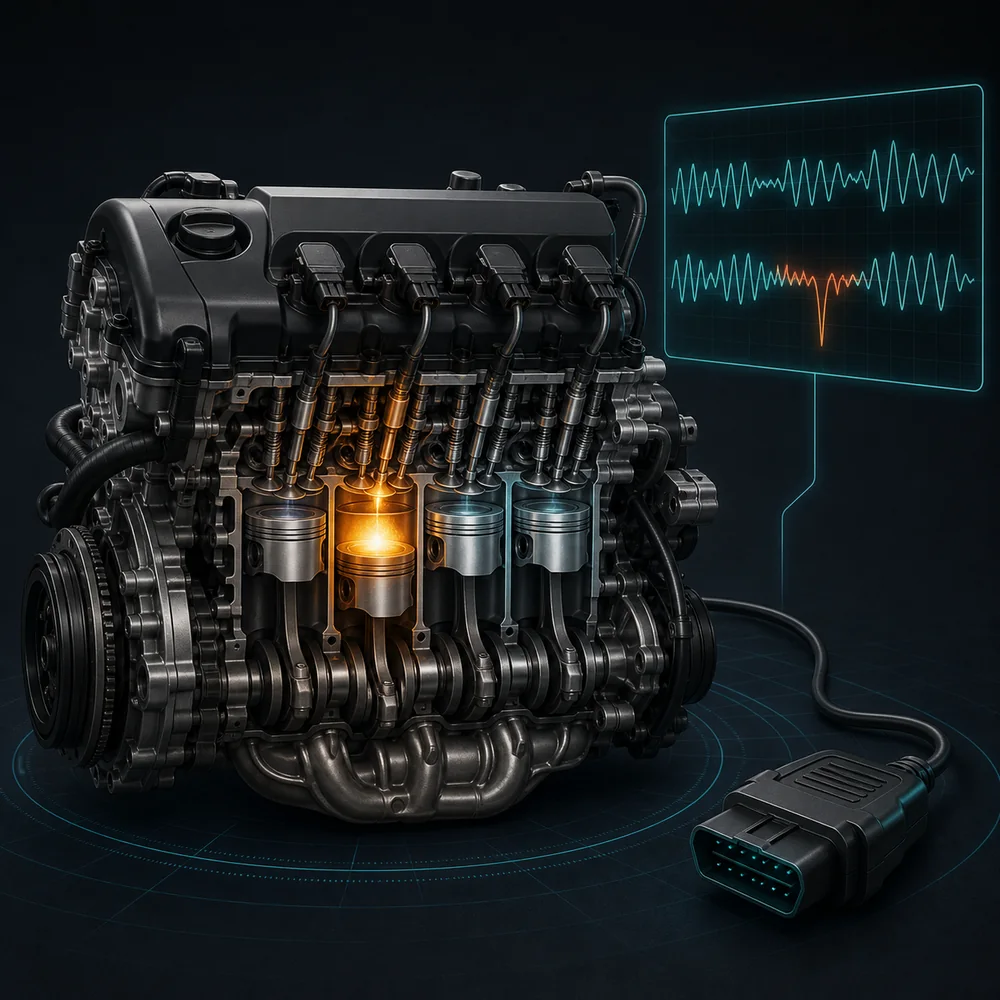
Save all codes and freeze-frame data. The code tells you what the control module detected, not which component must be replaced.
Quick answer
Fixing P0300 yourself starts with checking for simple issues like a loose gas cap or worn spark plugs. If those aren't the problem, you'll need to systematically test ignition components, fuel delivery, and engine compression to pinpoint the misfire cause.
How to Fix P0300 Yourself (Step-by-Step Guide)
Tools and Safety
You'll need a scan tool (even a basic OBD2 reader), spark plug socket, ratchet set, multimeter, fuel pressure gauge, and compression tester. Safety first: work in a well-ventilated area, disconnect the battery before servicing ignition or fuel systems, and avoid working on a hot engine. This job is moderate in difficulty; expect 2-6 hours depending on your experience and the root cause.
Step 1: Confirm the Code and Look for Additional Codes
Use your scan tool to verify P0300 is present and check for any other codes, especially cylinder-specific misfire codes (e.g., P0301, P0302). If other codes appear, address those first, as they often point directly to the problem. Clear the codes and take a short test drive to see if P0300 returns; this helps confirm it's a persistent issue, not a one-time glitch.
Step 2: Inspect Spark Plugs and Wires
Worn or damaged spark plugs are a common cause of P0300. Remove and inspect each plug for wear, fouling, or damage. Check the electrode gap (consult your service manual for specs) and replace any plugs that look worn or contaminated. While you're at it, inspect the spark plug wires (if your vehicle has them) for cracks, burns, or loose connections. Replace any damaged wires and ensure all connections are secure.
Step 3: Test Ignition Coils
Faulty ignition coils are another frequent culprit. If your vehicle has coil-on-plug (COP) ignition, swap a suspected bad coil with a known-good one from another cylinder and see if the misfire follows the coil. Alternatively, use a multimeter to test coil resistance (primary and secondary) against manufacturer specs. If a coil fails the test, replace it. If all coils test fine, move to the next step.
Step 4: Check Fuel Delivery
A clogged fuel filter, failing fuel pump, or dirty fuel injectors can cause random misfires. Start by checking the fuel pressure with a gauge; low pressure can indicate a failing pump or clogged filter. If pressure is low, replace the fuel filter (a cheap and easy first step). If the filter is clean and pressure is still low, the fuel pump may need replacement. For injectors, a fuel system cleaner added to the gas tank can sometimes resolve minor clogs, but persistent issues may require professional cleaning or replacement.
Step 5: Inspect for Vacuum Leaks
Vacuum leaks can cause lean conditions that trigger P0300. Inspect all vacuum hoses, intake manifold gaskets, and the PCV system for cracks, loose connections, or damage. A common trick is to spray carburetor cleaner around suspect areas while the engine is idling; if the idle smooths out temporarily, you've found your leak. Replace or repair any damaged components.
Step 6: Test Engine Compression
Low compression in one or more cylinders can cause misfires. Use a compression tester to check each cylinder (consult your manual for specs). If compression is low in a cylinder, perform a leak-down test to determine if the issue is a bad valve, worn piston rings, or a blown head gasket. These repairs are more advanced and may require professional help, but identifying the problem is the first step.
Step 7: Verify Repairs and Clear Codes
After addressing the suspected issue, clear the P0300 code with your scan tool and take the vehicle for a test drive. Monitor for the return of the code or any misfire symptoms. If the code doesn't return, the issue is likely resolved. If it does, revisit your steps or consider professional diagnosis for more complex issues like a faulty ECM or wiring problems.
What Does P0300 Mean?
P0300 indicates a random or multiple cylinder misfire detected by the engine control module (ECM). Unlike cylinder-specific codes (e.g., P0301 for cylinder 1), P0300 means the misfire isn't isolated to one cylinder, which can make diagnosis trickier. Common triggers include ignition system failures, fuel delivery issues, or mechanical problems like low compression.
Symptoms of P0300
You'll typically notice a rough idle, hesitation during acceleration, or a lack of power. The check engine light may flash if the misfire is severe enough to damage the catalytic converter. In some cases, you might also experience poor fuel economy or a sulfur-like smell from the exhaust, which can indicate unburned fuel.
Can You Still Drive With Code P0300?
Driving with P0300 is generally not recommended, especially if the misfire is severe. A persistent misfire can damage the catalytic converter, leading to costly repairs. If the vehicle is running roughly or the check engine light is flashing, pull over and have it towed to avoid further damage.
Details that improve the diagnosis
Watch the misfire counters at idle, during a gentle increase in engine speed and under load if a safe road test is possible. Compare fuel trims and note whether the fault follows temperature, moisture or a recent service. A cylinder pattern is often more useful than the code description alone.
Before clearing anything, record whether the code is current, pending, history or permanent. Save companion codes and freeze-frame conditions, then note recent repairs, a weak battery, weather changes and the exact moment the symptom appears. After a confirmed repair, clear only the erasable codes and complete the appropriate drive cycle. A permanent code normally clears only after the onboard monitor verifies that the fault is gone.