
Top 7 P0300 Causes: Random Cylinder Misfires
P0300 Code: 7 Common Causes of Random Cylinder Misfires. See symptoms, common causes, urgency and practical checks before parts are replaced.
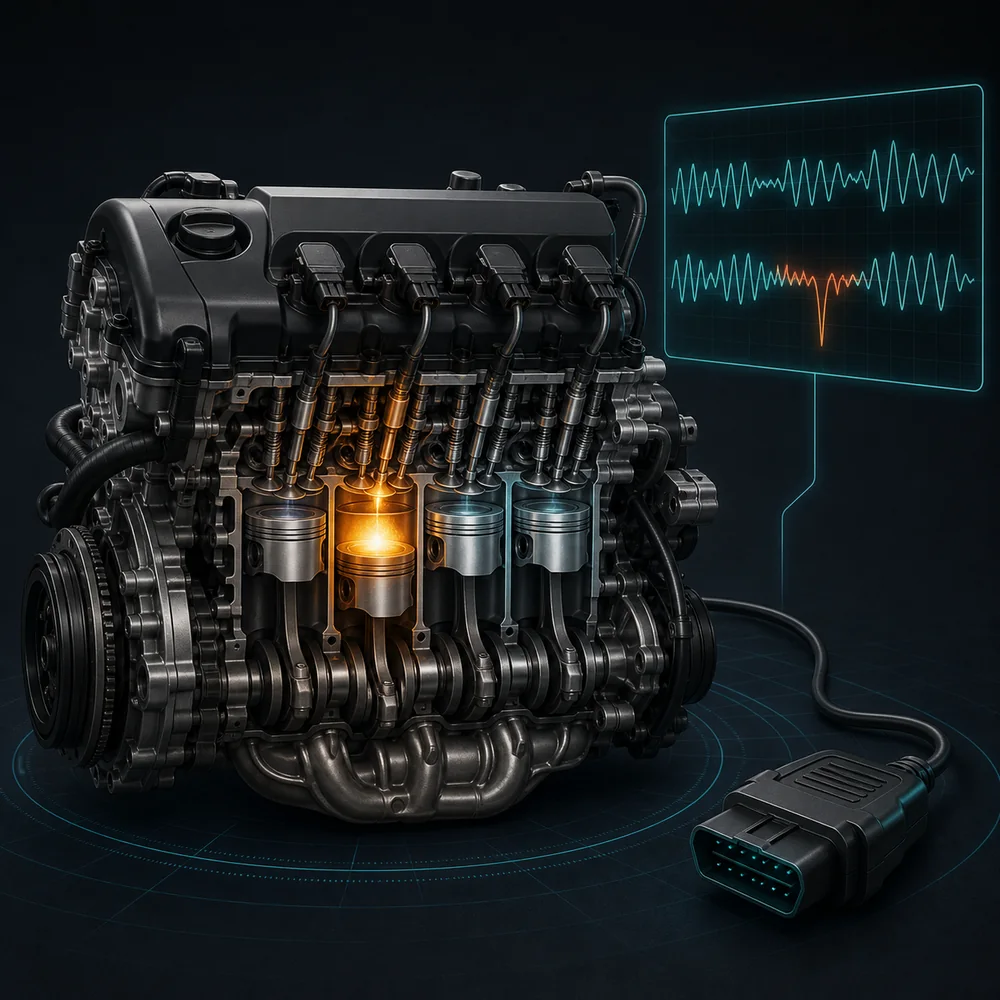
Save all codes and freeze-frame data. The code tells you what the control module detected, not which component must be replaced.
Quick answer
Code P0300 indicates a random or multiple cylinder misfire detected by your engine's computer. The most common causes are faulty spark plugs or ignition coils, but other issues like fuel system problems or vacuum leaks can also trigger it. Pinpointing the exact cause requires systematic diagnostics.
P0300 Causes: Top 7 Reasons for a Random/Multiple Cylinder Misfire
1. Worn or Faulty Spark Plugs
Spark plugs ignite the air-fuel mixture in each cylinder. Over time, electrodes wear down, gaps widen, or carbon buildup insulates the spark, leading to inconsistent combustion. Misfires often appear first under load (e.g., acceleration) or at higher RPMs. Inspect plugs for damage, fouling, or excessive gap; replace them if they're past their service interval (typically 60,000-100,000 miles, depending on type).
2. Bad Ignition Coils
Ignition coils generate the high voltage needed to fire the spark plugs. A failing coil can cause intermittent or complete spark loss to one or more cylinders, resulting in a P0300 code. Symptoms include rough idle, hesitation, and a noticeable drop in power. Coils often fail due to heat, vibration, or internal shorts. Swapping coils between cylinders can help isolate the issue; if the misfire "moves" with the coil, it's likely the culprit.
3. Faulty or Clogged Fuel Injectors
Fuel injectors deliver precise amounts of fuel into each cylinder. A clogged or leaking injector disrupts the air-fuel ratio, causing misfires. Dirty fuel, poor maintenance, or age can lead to injectors sticking open, closed, or spraying unevenly. A fuel system cleaner may temporarily improve performance, but severely clogged injectors often require professional cleaning or replacement. Scan for lean/rich codes (P0171, P0174) to confirm injector issues.
4. Low Fuel Pressure
The fuel pump or fuel pressure regulator may fail, reducing pressure to the injectors. Insufficient pressure starves the engine of fuel, especially under demand, leading to random misfires. A weak fuel pump often causes long cranking times, stalling, or a whining noise from the tank. Use a fuel pressure gauge to check against manufacturer specs; low readings (e.g., below 35-40 psi on many fuel-injected engines) point to pump, regulator, or clogged fuel filter issues.
5. Vacuum Leaks
Unmetered air entering the engine (e.g., via cracked hoses, intake manifold gaskets, or PCV system leaks) throws off the air-fuel ratio. The ECM can't compensate for the extra air, leading to lean conditions and misfires. Common leak points include the intake manifold, throttle body gasket, or vacuum lines. Spraying carburetor cleaner around suspected areas while the engine idles can help locate leaks; an RPM increase indicates air is being drawn in.
6. Faulty Mass Air Flow (MAF) or Oxygen (O2) Sensors
The MAF sensor measures incoming air, while O2 sensors monitor exhaust oxygen levels to adjust fuel delivery. A dirty or failing MAF sensor can provide incorrect readings, causing the ECM to miscalculate fuel needs. Similarly, a lazy or contaminated O2 sensor may not detect rich/lean conditions accurately. Cleaning the MAF with specialized spray can restore function, but damaged sensors require replacement. Check for codes like P0101 (MAF circuit) or P0130-P0167 (O2 sensor faults) alongside P0300.
7. Engine Mechanical Issues
Worn or damaged internal components; such as low compression (from worn piston rings, valvetrain issues, or a blown head gasket), broken valve springs, or a slipped timing belt; can cause misfires. These problems often produce additional symptoms like excessive oil consumption, white smoke (coolant burning), or a ticking noise from the valvetrain. A compression test or leak-down test is necessary to diagnose mechanical faults, which typically require major repairs.
How to Diagnose P0300
Start with the simplest checks: inspect spark plugs and coils, then move to fuel and air systems. A scan tool can reveal freeze-frame data (RPM, load, temperature) when the misfire occurred, helping narrow the cause. If the misfire is consistent, focus on the affected cylinder(s); if it's random, prioritize fuel, air, or sensor issues. See the full P0300 repair cost guide for a detailed breakdown of potential expenses.
Symptoms of P0300
Drivers often notice a rough or shaking idle, hesitation during acceleration, or a noticeable lack of power. The check engine light may flash if the misfire is severe enough to damage the catalytic converter. Fuel economy typically worsens, and you might smell unburned fuel from the exhaust. Repairs typically range from $150 to $1,000+ depending on the cause.
Can You Still Drive With Code P0300?
Driving with a P0300 code is not recommended long-term. While you may be able to limp the car short distances, prolonged misfires can damage the catalytic converter, oxygen sensors, or other components. If the check engine light is flashing, pull over and have the vehicle towed to avoid costly repairs.
Details that improve the diagnosis
Watch the misfire counters at idle, during a gentle increase in engine speed and under load if a safe road test is possible. Compare fuel trims and note whether the fault follows temperature, moisture or a recent service. A cylinder pattern is often more useful than the code description alone.
Before clearing anything, record whether the code is current, pending, history or permanent. Save companion codes and freeze-frame conditions, then note recent repairs, a weak battery, weather changes and the exact moment the symptom appears. After a confirmed repair, clear only the erasable codes and complete the appropriate drive cycle. A permanent code normally clears only after the onboard monitor verifies that the fault is gone.