
Clean Your MAF Sensor to Resolve P0100-P0104 Codes
P0100: Clean MAF Sensor to Fix Engine Codes. See symptoms, common causes, driving risk and checks that help confirm the fault before parts are replaced.
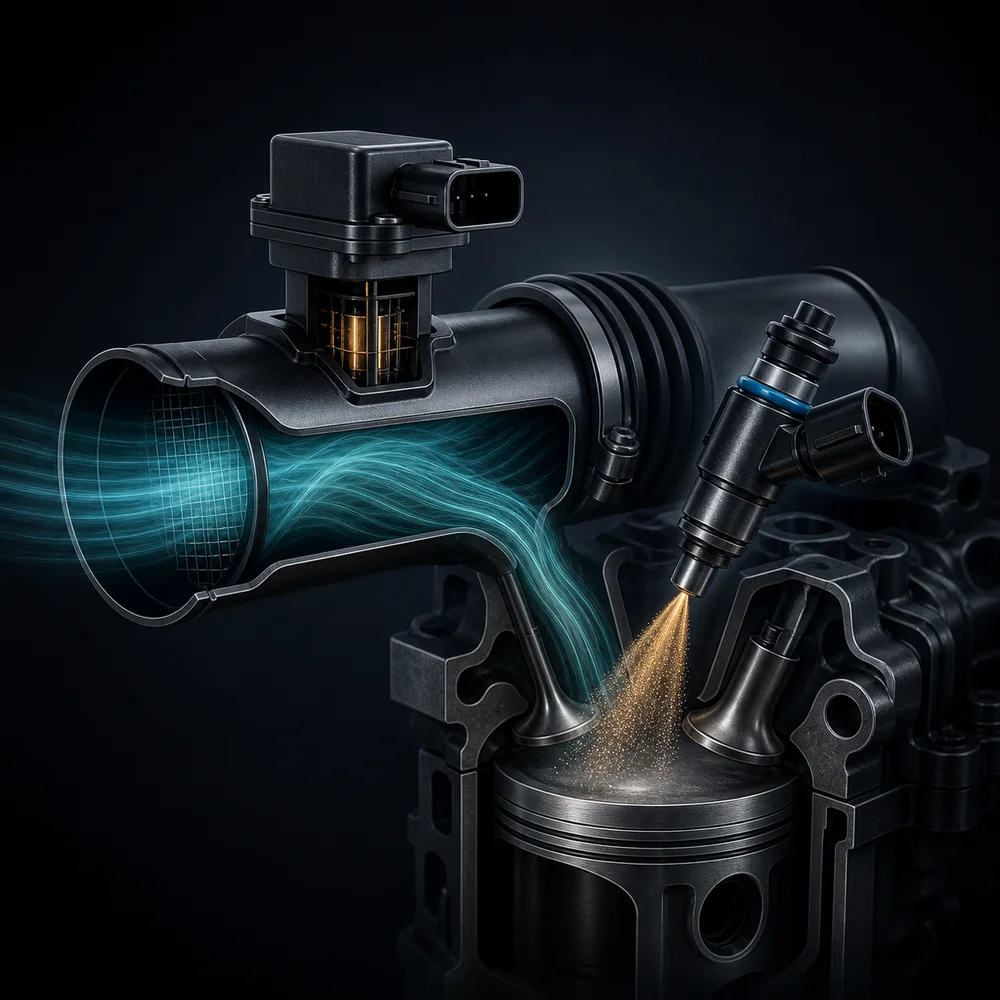
Save all codes and freeze-frame data. The code tells you what the control module detected, not which component must be replaced.
Quick answer
Cleaning the mass airflow (MAF) sensor with a specialized cleaner can often resolve P0100, P0101, P0102, P0103, or P0104 codes caused by contamination. These codes indicate issues with the MAF sensor circuit or signal, and a dirty sensor is a common trigger. If cleaning doesn't fix the problem, the sensor or wiring may need further diagnosis.
Step-by-Step Guide to Cleaning a MAF Sensor to Fix P0100-P0104 Codes
Tools and Supplies Needed
You'll need a MAF sensor cleaner (such as CRC or Berryman), a flathead screwdriver or socket set, and a clean microfiber cloth. Avoid compressed air or harsh cleaners like brake cleaner, as these can damage the delicate sensor elements. Safety glasses are recommended to protect your eyes from spray.
Difficulty Level
This is a beginner-friendly task that typically takes 20-30 minutes. The hardest part is locating the MAF sensor, which is usually mounted in the air intake duct between the air filter and throttle body. No special tools are required beyond basic hand tools.
Step 1: Locate the MAF Sensor
Open the hood and follow the air intake duct from the air filter box toward the engine. The MAF sensor is a small, rectangular or cylindrical component with a wiring harness connected to it. In most vehicles, it's secured with two screws or clips. Consult your owner's manual if you're unsure of its location.
Step 2: Disconnect the Electrical Connector and Remove the Sensor
Unplug the electrical connector by pressing the release tab. Then, remove the screws or clips holding the MAF sensor in place. Gently pull the sensor out of the intake duct. Avoid touching the delicate sensing wires or film inside the sensor, as oils from your skin can contaminate them.
Step 3: Clean the Sensing Elements
Hold the MAF sensor with the sensing elements facing you. Spray the MAF cleaner in short bursts, covering the wires or film evenly. Do not scrub or touch the elements with the cloth; let the cleaner dissolve the contaminants. Shake off any excess liquid and allow the sensor to air-dry completely (usually 2-3 minutes). Avoid blowing compressed air, as this can damage the sensor.
Step 4: Reinstall the MAF Sensor
Once dry, reinsert the MAF sensor into the intake duct and secure it with the screws or clips. Reconnect the electrical connector until it clicks into place. Ensure the air intake duct is properly seated and there are no gaps or leaks.
Step 5: Clear the Codes and Test Drive
Use an OBD2 scanner to clear the P0100 code (or related P0101-P0104 codes). Start the engine and let it idle for a minute to ensure smooth operation. Take a test drive, including acceleration and highway speeds, to confirm the code doesn't return. If the code reappears, the sensor may be faulty or there could be wiring or connector issues.
Safety and Pro Tips
Always disconnect the battery before cleaning if you're unsure about handling electrical components, though this isn't strictly necessary for most MAF sensor cleanings. Never use water or non-specialized cleaners, as these can leave residues or damage the sensor. If the MAF sensor wires are visibly broken or the housing is cracked, replacement is likely needed.
What P0100-P0104 Codes Mean
P0100 is a generic code for a MAF sensor circuit malfunction, while P0101-P0104 specify issues like out-of-range signals, low input, or intermittent problems. These codes are triggered when the ECM detects an implausible or erratic signal from the MAF sensor, often due to contamination, wiring issues, or sensor failure. Cleaning the sensor is the first recommended step because dirt or oil buildup disrupts airflow measurements.
Symptoms of a Faulty or Dirty MAF Sensor
Common symptoms include rough idle, poor acceleration, or reduced fuel efficiency. The engine may hesitate or stall, especially during cold starts or under load. In some cases, the check engine light may be the only noticeable sign. These symptoms occur because the ECM relies on accurate MAF data to balance the air-fuel mixture, and incorrect readings lead to poor engine performance.
Can You Still Drive With Code P0100?
You can usually drive short distances with a P0100 code, but prolonged driving may lead to reduced fuel economy, poor performance, or potential engine damage over time. If the vehicle runs roughly or stalls, avoid driving until the issue is addressed. In most cases, cleaning or replacing the MAF sensor resolves the problem quickly.
Details that improve the diagnosis
Compare the reported value with engine temperature, barometric pressure, throttle position and related sensors. A signal that is electrically valid can still be implausible. Fuel trims at idle and at a steady higher speed help separate an intake leak from a fuel-delivery or measurement problem.
Before clearing anything, record whether the code is current, pending, history or permanent. Save companion codes and freeze-frame conditions, then note recent repairs, a weak battery, weather changes and the exact moment the symptom appears. After a confirmed repair, clear only the erasable codes and complete the appropriate drive cycle. A permanent code normally clears only after the onboard monitor verifies that the fault is gone.