
P03001 min
P0300 Symptoms: Signs of a Random Engine Misfire
P0300 Symptoms: Signs of a Random Engine Misfire. See symptoms, common causes, driving risk and checks that help confirm the fault before parts are replaced.
Read diagnostic guide →Diagnostic system
Understand random and cylinder-specific misfires, the warning signs to watch, and the tests that separate ignition, fuel, air and mechanical faults.
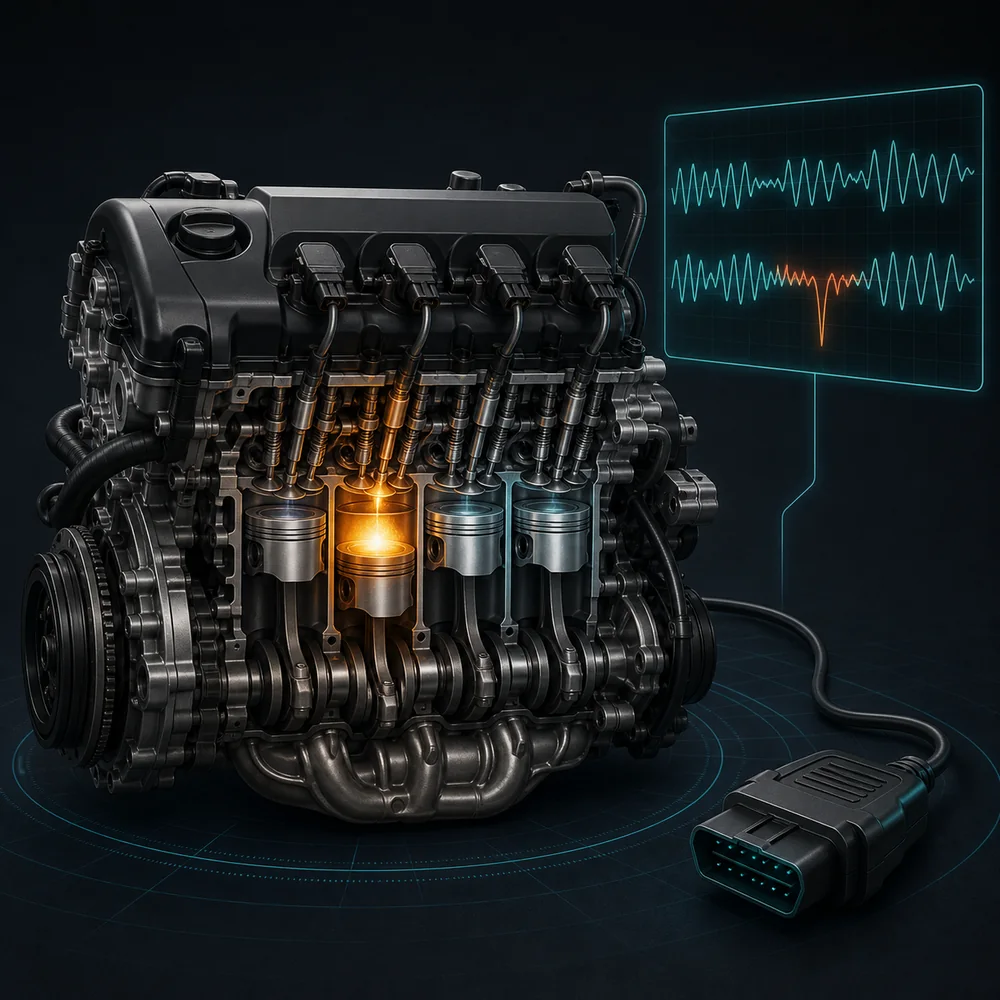
P0300 Symptoms: Signs of a Random Engine Misfire. See symptoms, common causes, driving risk and checks that help confirm the fault before parts are replaced.
Read diagnostic guide →P0300 Code: Causes and Fixes for Random Misfires. See symptoms, common causes, driving risk and checks that help confirm the fault before parts are replaced.
Read diagnostic guide →A misfire code means the crankshaft did not accelerate as expected after one or more combustion events. It does not prove that a spark plug or ignition coil has failed. Fuel delivery, unmetered air, compression, valve timing and sensor information can produce the same result.
Compare random codes with cylinder-specific codes, note whether the fault appears cold, hot, at idle or under load, and review the freeze-frame record. A flashing malfunction indicator lamp requires immediate attention because continued combustion failures can overheat the catalytic converter.