
What Does the P0500 Code Mean for Your Vehicle Speed Sensor?
P0500: Vehicle Speed Sensor Fault Causes & Fixes. See symptoms, common causes, driving risk and checks that help confirm the fault before parts are replaced.
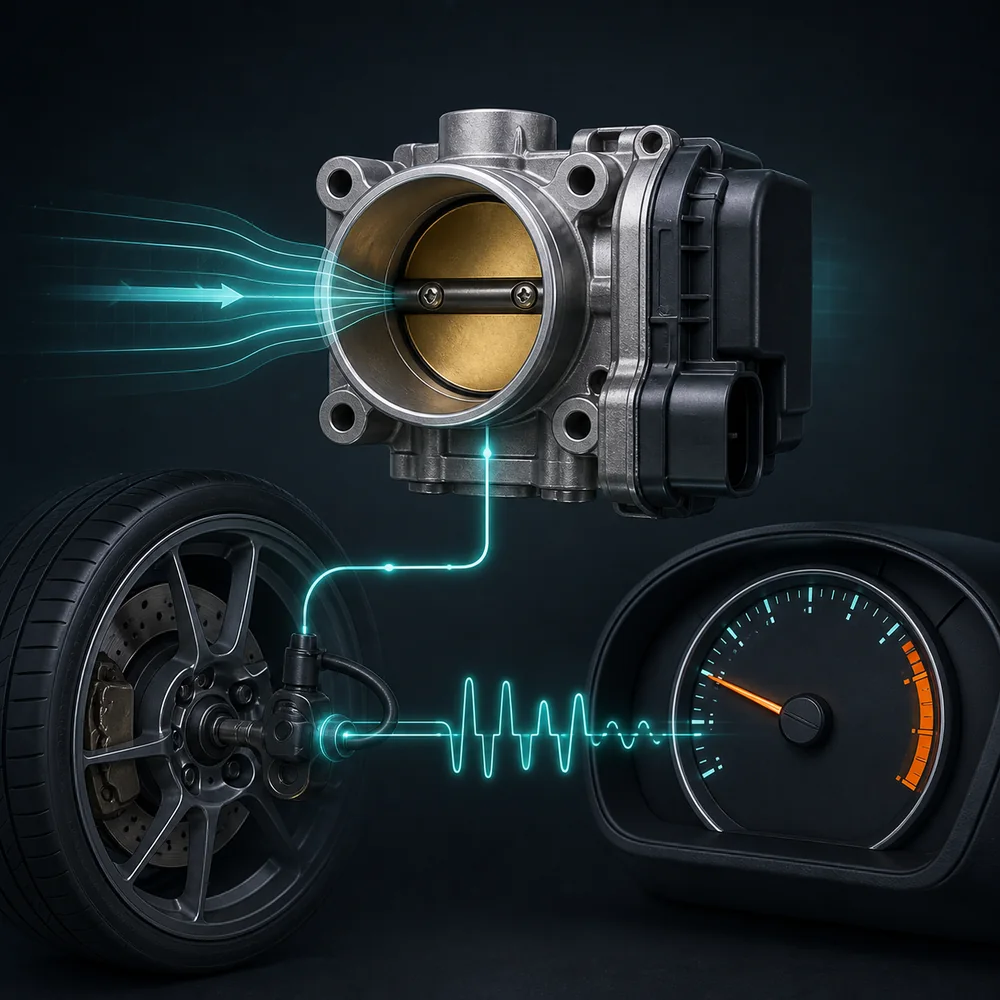
Save all codes and freeze-frame data. The code tells you what the control module detected, not which component must be replaced.
Quick answer
OBD2 code P0500 indicates the engine control module (ECM) has detected an issue with the vehicle speed sensor (VSS) or its circuit. This code triggers when the ECM receives no signal, an erratic signal, or a signal outside expected parameters from the VSS. Without accurate speed data, the ECM cannot properly manage transmission shifts, fuel delivery, or other speed-dependent systems.
What the P0500 Code Means: Vehicle Speed Sensor Malfunction
The vehicle speed sensor (VSS) is a magnetic or Hall-effect sensor mounted on the transmission or transaxle that measures the rotational speed of a gear, shaft, or tone ring. It generates an AC or digital pulse signal proportional to vehicle speed, which the ECM interprets as miles per hour (MPH) or kilometers per hour (KPH). When the ECM sets a P0500 code, it means the VSS signal is missing, intermittent, or implausible; such as reading zero MPH while the wheels are turning, or a speed that doesn't match wheel speed sensor data (where applicable).
In most vehicles, the VSS is a two- or three-wire sensor. A two-wire sensor generates its own AC voltage as the gear teeth pass by, while a three-wire sensor (common in newer models) uses a reference voltage, ground, and signal wire. A P0500 code commonly points to wiring or connector issues, a failed sensor, or damage to the tone ring (the toothed wheel the sensor reads). The ECM may also flag P0500 if the VSS circuit is shorted to ground, open, or shorted to power, preventing a clean signal.
The code often appears alongside drivability issues because many systems rely on accurate speed data. The transmission control module (TCM) uses VSS input to determine shift points; without it, the transmission may default to a limp mode, holding a single gear or shifting erratically. The ECM also uses VSS data for idle control, fuel cutoff during deceleration, and torque converter clutch engagement. A faulty VSS can even affect the speedometer and odometer, as these often pull data directly from the sensor or ECM.
Diagnosing a P0500 code typically involves scanning for additional codes (especially those related to the transmission or wheel speed sensors), inspecting the VSS wiring harness for damage or corrosion, and testing the sensor's resistance and output with a multimeter or oscilloscope. On some vehicles, the VSS may be accessible from the engine bay or under the vehicle near the transmission, while on others it may require removing undercarriage panels or the driveshaft. A visual inspection of the tone ring is also critical, as missing or damaged teeth can cause intermittent or no signal.
It's worth noting that some vehicles use multiple speed sensors; such as an output speed sensor (OSS) and input speed sensor (ISS); and a P0500 code may specify which one is at fault. Always refer to the vehicle's service manual to confirm the exact sensor and circuit involved, as the diagnosis and replacement steps can vary significantly between makes and models.
Symptoms of a P0500 Code
A malfunctioning vehicle speed sensor often causes erratic or harsh transmission shifts, as the TCM lacks the data needed to time gear changes properly. Drivers may also notice the speedometer not working or fluctuating wildly, and the cruise control may refuse to engage. In some cases, the check engine light is the only symptom, but the vehicle may enter limp mode to prevent damage to the transmission or drivetrain.
Common Causes of the P0500 Code
The most frequent causes are a faulty VSS, damaged wiring or connectors in the sensor circuit, or a broken tone ring. Less commonly, issues with the ECM or TCM, or poor ground connections, can also trigger the code. A thorough inspection of the sensor and its circuit is the first step in pinpointing the root cause. For a full cost breakdown, see the full P0500 repair cost guide for a detailed breakdown.
Can You Still Drive With Code P0500?
Driving with a P0500 code is generally not recommended. While the vehicle may remain drivable, erratic shifting or limp mode can create unsafe conditions, especially in heavy traffic or at highway speeds. If the speedometer is inoperable, you also risk unintentionally speeding or being unaware of your actual speed, which is a safety hazard.
Details that improve the diagnosis
Confirm whether the code describes a sensor circuit or a real operating condition. Mechanical oil pressure, charging voltage and brake-switch operation may need direct verification. Compare speed and idle data with the exact vehicle specification instead of relying on a universal number.
Before clearing anything, record whether the code is current, pending, history or permanent. Save companion codes and freeze-frame conditions, then note recent repairs, a weak battery, weather changes and the exact moment the symptom appears. After a confirmed repair, clear only the erasable codes and complete the appropriate drive cycle. A permanent code normally clears only after the onboard monitor verifies that the fault is gone.