
P0171: System Too Lean on Bank 1 - Causes & Fixes
P0171 Code: System Too Lean (Bank 1) Causes & Solutions. See symptoms, common causes, urgency and practical checks before parts are replaced.
Save all codes and freeze-frame data. The code tells you what the control module detected, not which component must be replaced.
Quick answer
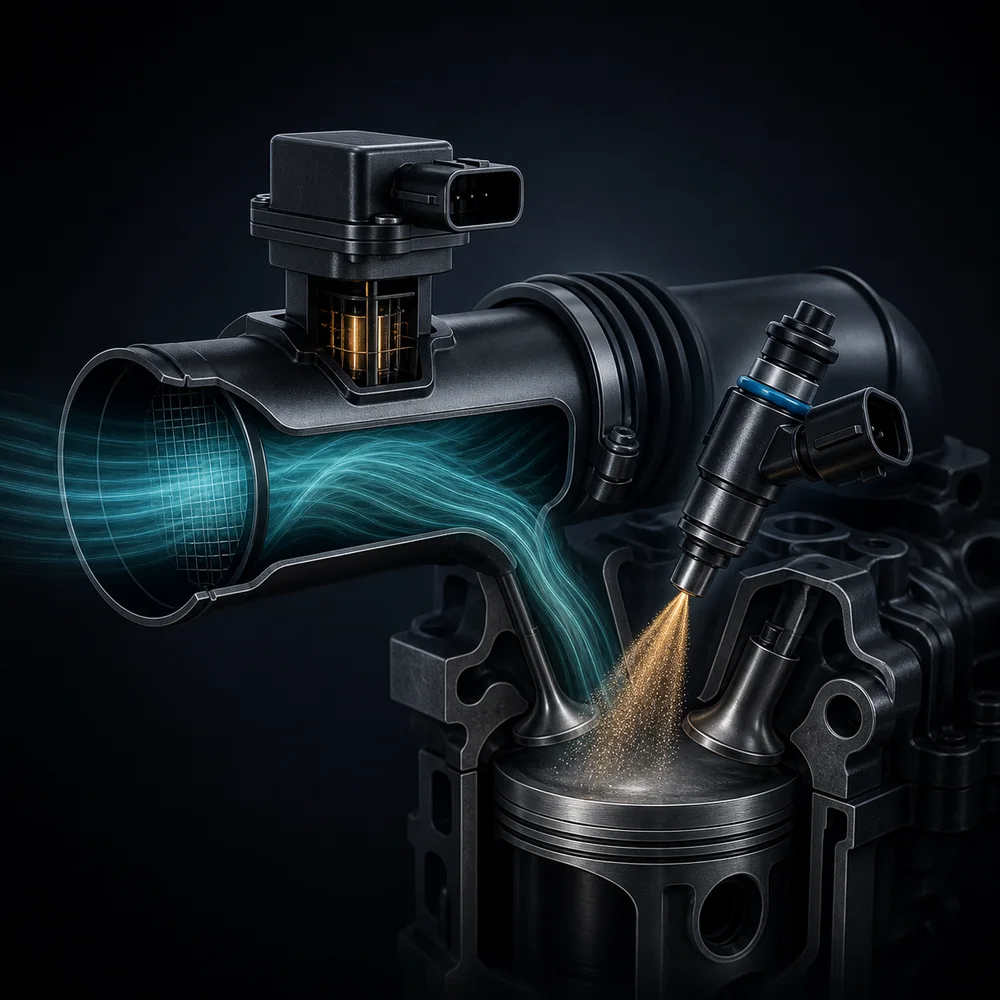
Code P0171 indicates the engine control module (ECM) has detected a lean air-fuel mixture on Bank 1, meaning too much air or too little fuel is entering the combustion chamber. This triggers the check engine light and commonly causes rough idling or hesitation under load. The fix depends on the underlying cause, which can range from a vacuum leak to a failing fuel pump.
P0171 Code: System Too Lean (Bank 1) ; Causes and Fixes
Most Common Causes (Ordered by Likelihood)
1. Vacuum Leaks ; The most frequent culprit, especially in older vehicles. Cracked or disconnected vacuum hoses, a broken PCV hose, or a faulty intake manifold gasket allow unmetered air to enter the intake, skewing the air-fuel ratio. Inspect all hoses for cracks, loose clamps, or hissing sounds at idle. A common hotspot is the intake boot between the MAF sensor and throttle body.
2. Faulty Mass Air Flow (MAF) Sensor ; A contaminated or failing MAF sensor underreports airflow, causing the ECM to reduce fuel delivery. Cleaning the sensor with MAF-specific cleaner can restore accuracy, but replacement is needed if internal wiring or the hot film is damaged. Symptoms often include poor acceleration and stalling after a cold start.
3. Dirty or Clogged Fuel Injectors ; Injectors that are partially clogged or gummed up deliver less fuel than the ECM expects. This is more common in high-mileage vehicles or those with infrequent fuel system maintenance. A fuel injector cleaning service (or replacement of faulty injectors) can resolve this. Look for misfires or hesitation during light throttle.
4. Weak or Failing Fuel Pump ; A failing fuel pump struggles to maintain proper rail pressure, starving the engine of fuel under load. This often triggers P0171 alongside P0190 (Fuel Rail Pressure Sensor Circuit Malfunction). Listen for a whining noise from the fuel tank or measure fuel pressure with a gauge; low pressure (below spec, often 35-65 psi depending on the vehicle) confirms the issue.
5. Exhaust Leak Before the Oxygen Sensor ; A leak in the exhaust manifold or pipes upstream of the front O2 sensor allows atmospheric oxygen to enter the exhaust stream. The O2 sensor reads this as excess oxygen, leading the ECM to believe the mixture is lean. Inspect for soot marks, rust, or hissing sounds near the manifold gasket.
6. Faulty Oxygen (O2) Sensors ; A lazy or contaminated upstream O2 sensor (Bank 1, Sensor 1) may provide inaccurate readings. The ECM relies on this sensor to adjust the air-fuel mixture in real time. If the sensor is slow to respond or stuck lean, it can trigger P0171. Test with a scan tool to monitor sensor voltage and response time.
7. Low Fuel Pressure or Clogged Fuel Filter ; A restricted fuel filter or failing fuel pressure regulator can reduce fuel delivery. Check fuel pressure at the rail; if it's below specification, replace the filter or regulator. This is less common but worth checking if other causes are ruled out.
How to Tell Causes Apart
Start with a visual inspection for vacuum leaks; spray carb cleaner around suspected areas at idle; a temporary RPM increase indicates a leak. If no leaks are found, use a scan tool to monitor live data: compare short-term and long-term fuel trim values (STFT and LTFT). Positive fuel trim values (e.g., +15% to +25%) confirm a lean condition. High LTFT paired with a MAF reading that's too low points to a MAF issue. If fuel pressure is low, focus on the fuel system. An exhaust leak can often be heard or smelled near the manifold.
Symptoms of P0171
Drivers commonly notice rough idling, hesitation during acceleration, or a slight loss of power, especially at highway speeds. The check engine light is the first sign, often accompanied by poor fuel economy. In severe cases, the engine may stall or run hot due to the lean mixture. See the full P0171 symptom guide for a detailed breakdown.
When to Seek Professional Diagnosis
If basic checks (vacuum leaks, MAF sensor cleaning, fuel pressure) don't resolve the issue, a professional diagnosis is wise. Persistent P0171 with high fuel trim values often requires advanced tools like a smoke machine to locate hidden vacuum leaks or an oscilloscope to test sensor signals. Repairs typically range from $150 to $1,000+ depending on the cause. See the full P0171 repair cost guide for a detailed breakdown.
Can You Still Drive With Code P0171?
You can usually drive short distances with P0171, but prolonged driving may cause engine damage due to the lean mixture running hot. Avoid towing or heavy loads, as the lack of fuel can lead to detonation (pre-ignition) and internal engine harm. Address the issue promptly to prevent costly repairs.
Details that improve the diagnosis
Compare the reported value with engine temperature, barometric pressure, throttle position and related sensors. A signal that is electrically valid can still be implausible. Fuel trims at idle and at a steady higher speed help separate an intake leak from a fuel-delivery or measurement problem.
Before clearing anything, record whether the code is current, pending, history or permanent. Save companion codes and freeze-frame conditions, then note recent repairs, a weak battery, weather changes and the exact moment the symptom appears. After a confirmed repair, clear only the erasable codes and complete the appropriate drive cycle. A permanent code normally clears only after the onboard monitor verifies that the fault is gone.