
B0001: Driver Frontal Deployment Control Code
B0001 Code: Driver Frontal Airbag Deployment Control. See symptoms, common causes, urgency and practical checks before parts are replaced.
Save all codes and freeze-frame data. The code tells you what the control module detected, not which component must be replaced.
Quick answer
Code B0001 indicates a fault in the driver frontal airbag deployment control circuit, meaning the vehicle's airbag control module (ACM) has detected an issue that could prevent the driver's frontal airbag from deploying correctly in a crash. This is a critical safety-related code that requires immediate diagnosis, as it directly impacts the supplemental restraint system (SRS).
How the Driver Frontal Deployment Control System Works and Why B0001 Triggers
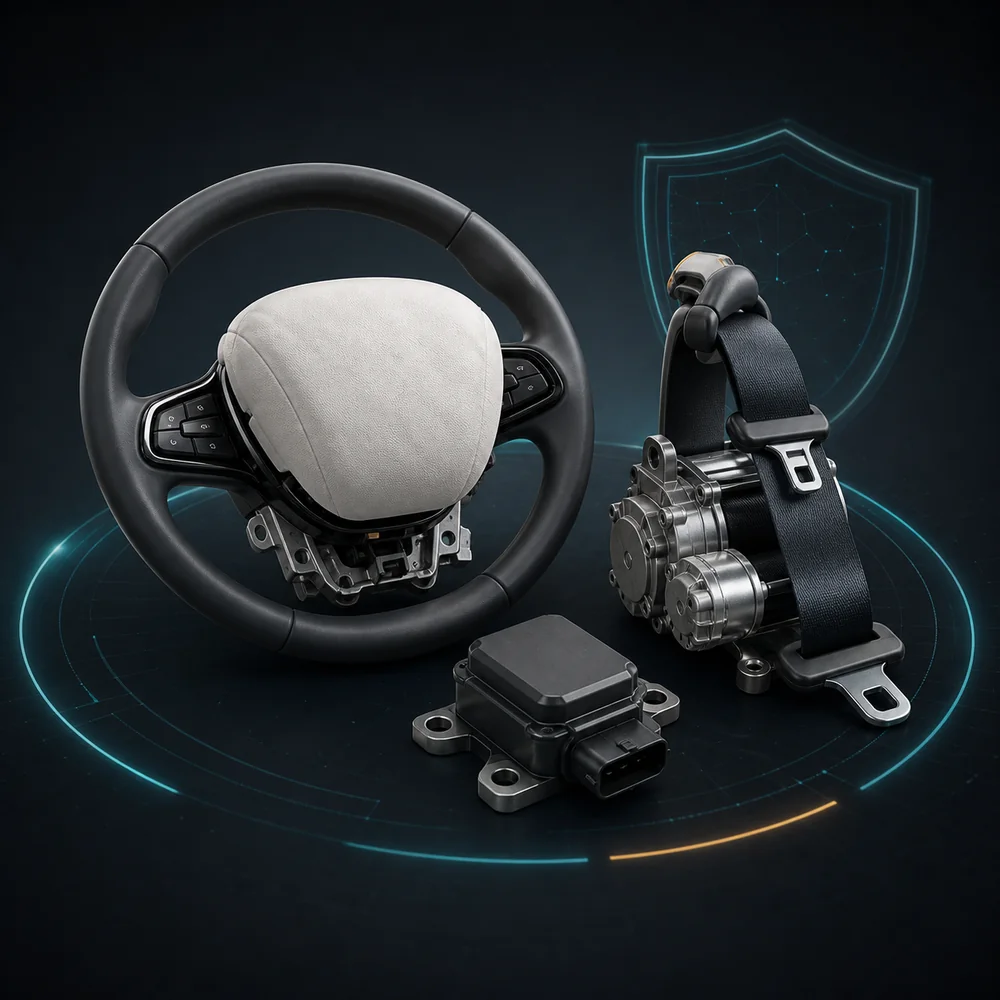
The driver frontal deployment control system is part of the SRS, which relies on precise electrical signals to determine when and how to deploy the driver's airbag. The airbag control module (ACM) continuously monitors the deployment loop; a closed circuit that includes the driver airbag squib (a small pyrotechnic device), wiring harness, and clockspring assembly (a spiral cable that maintains electrical contact between the steering wheel and the vehicle's wiring as the wheel turns).
B0001 is set when the ACM detects an open circuit, short to ground, or short to voltage in this deployment loop. An open circuit (e.g., a broken wire or disconnected plug) means the ACM cannot send the deployment signal to the airbag squib. A short to ground or voltage can falsely trigger the squib or prevent the ACM from communicating with it. The clockspring is a common failure point because its thin, flexible wiring can break over time due to repeated steering wheel rotation, heat, or contamination. Corrosion or damage in the wiring harness; often near the steering column or under the dash; can also trigger this code.
The ACM performs a self-test during each ignition cycle. If it cannot verify the integrity of the deployment loop within a set time (usually a few seconds), it logs B0001 and illuminates the airbag warning light on the instrument cluster. Unlike some OBD2 codes that may be intermittent, B0001 is typically persistent once triggered, as the ACM will not clear it until the fault is resolved and the system passes its self-test again.
It's important to note that B0001 is specific to the driver's frontal airbag circuit. Similar codes exist for the passenger side (e.g., B0002) or other airbag components, but B0001 isolates the issue to the driver's deployment path. The ACM may also store additional codes if multiple faults exist, so a full scan of the SRS system is essential during diagnosis.
Common Symptoms of B0001
In most cases, the only visible symptom is an illuminated airbag warning light on the dashboard. The vehicle may otherwise drive normally, as B0001 does not directly affect engine performance, transmission, or other non-SRS systems. However, some drivers report the horn malfunctioning if the clockspring is involved, since the horn circuit often shares the same spiral cable. There are no drivability symptoms like rough idle or poor acceleration tied to this code.
Typical Causes of B0001
Common causes include a faulty clockspring, damaged or corroded wiring in the deployment loop, a disconnected or loose electrical connector, or a malfunctioning airbag squib. Less often, the issue may stem from a defective ACM, though this is rare. A full diagnosis with a scan tool capable of SRS system testing is required to pinpoint the exact cause. See the full B0001 repair cost guide for a detailed breakdown of repair expenses per cause.
Can You Still Drive With Code B0001?
Driving with B0001 is not recommended. While the vehicle may operate normally, the driver's frontal airbag may fail to deploy in a collision, significantly increasing the risk of injury. Until the issue is resolved, the airbag system is in a fault state and cannot be relied upon for protection. If the code appears, schedule an immediate inspection with a qualified technician.
Details that improve the diagnosis
Read the SRS code with a tool that reports manufacturer details and symptom bytes. Do not probe deployment loops with a test light or ordinary meter. Connector locks, shorting bars and power-down waiting periods must be handled according to the official restraint-system procedure.
Before clearing anything, record whether the code is current, pending, history or permanent. Save companion codes and freeze-frame conditions, then note recent repairs, a weak battery, weather changes and the exact moment the symptom appears. After a confirmed repair, clear only the erasable codes and complete the appropriate drive cycle. A permanent code normally clears only after the onboard monitor verifies that the fault is gone.
Information to record before any repair
Write down the exact code, its status and every companion code reported by a complete vehicle scan. Save the freeze-frame values, including engine speed, load, coolant temperature, vehicle speed, battery voltage and fuel trims when available. Note whether the warning appeared during a cold start, at idle, under acceleration, after refueling, in wet weather or immediately after other work. These details help separate an intermittent electrical problem from a repeatable mechanical or operating-condition fault.
Identify the exact year, make, model, engine, transmission and market version before using a wiring diagram or specification. Connector pinouts, monitor thresholds, component locations and test procedures can change within the same model line. Check current manufacturer service information and relevant technical service bulletins. A bulletin can improve the test sequence, but it should not be treated as proof that the same fault exists on every vehicle.
How to verify the repair
A warning light that stays off immediately after codes are cleared does not by itself confirm a repair. Recheck live data, repeat the operating condition that originally set the code when it is safe to do so, and confirm that no pending code returns. Some monitors need a specific drive cycle before they run. Permanent codes are normally removed by the control module only after it sees enough successful monitor results. If symptoms remain or the code returns, continue testing instead of replacing another part by guesswork.